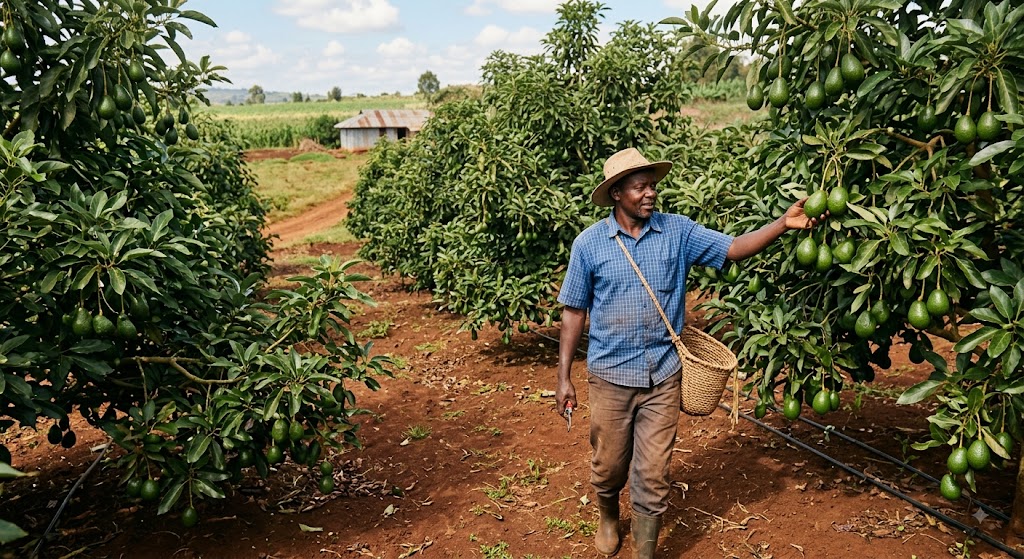
Avocado farming has quietly transformed from a small-scale subsistence crop into one of Kenya’s most lucrative and talked-about agricultural investments. For growers with suitable land, reliable water access, and solid farm-management practices, a mature orchard can generate hundreds of thousands of shillings in annual sales.
However, high-profile industry reports often highlight gross revenues reaching as much as Ksh 1.4 million per acre in a favorable season. This has led to a rush of speculative farming, sometimes ending in disappointment. Prospective farmers must distinguish between optimistic headline revenue and actual net profit, while also understanding the stringent regulations governing the booming export market.
This comprehensive guide breaks down the financial realities, operational demands, and precise steps required to access the highly profitable global avocado markets today.
1. The Financial Reality: Deconstructing the Ksh 1.4 Million Revenue Calculation
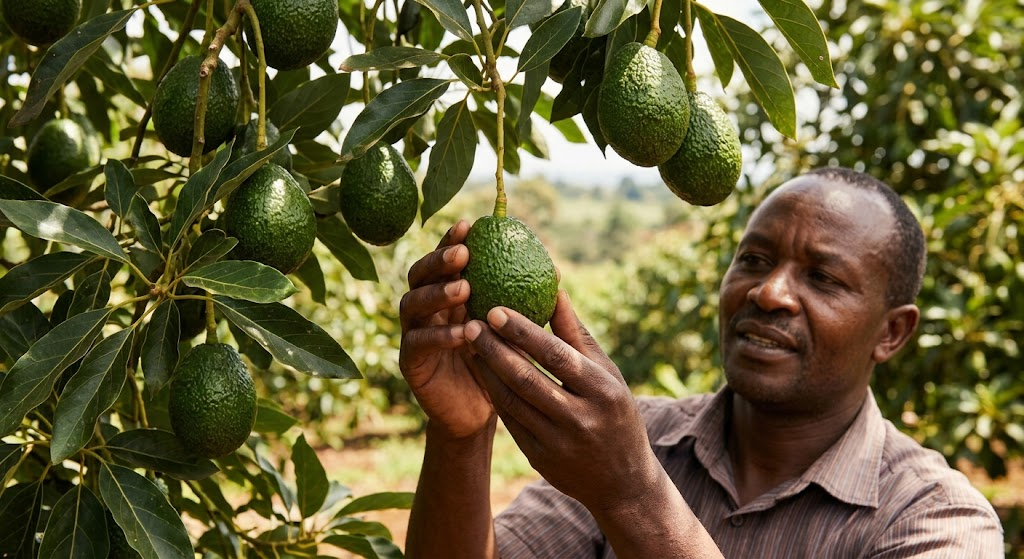
The widely cited gross figure of Ksh 1.428 million per acre is not a myth, but it relies on highly specific, optimal conditions that take years to achieve.
The Baseline Calculation:
- Tree Density: A standard commercial avocado orchard accommodates between 100 and 120 trees per acre, depending on the variety and spacing configuration adopted.
- Yield Output: Assuming an illustrative baseline of 119 productive trees with each tree producing an average of 60 kg of fruit, the total harvest equals roughly 7,140 kg.
- Market Pricing: At an export-driven rate of Ksh 200 per kilogram, total gross sales equal:
7,140 kg × Ksh 200 = Ksh 1,428,000.
Neither peak yield nor peak pricing should be taken for granted. To achieve these numbers, trees must reach full maturity (often taking 5 to 7 years), weather conditions must be favorable, management must be precise, and market demand must remain exceptionally strong.
Sensitivity Analysis: How Market Prices Impact Gross Revenue
Selling price is one of the most volatile variables in the avocado business. Because market rates fluctuate based on global supply, local harvesting seasons, and buyer channels, farmers must evaluate conservative, moderate, and optimistic financial projections.
Using the standard 7,140 kg harvest, potential gross revenue shifts dramatically across price points:
| Price per Kilogram | Potential Gross Revenue (7,140 kg Harvest) | Market Context |
|---|---|---|
| Ksh 80 / kg | Ksh 571,200 | Low-season / local buyer baseline |
| Ksh 100 / kg | Ksh 714,000 | Standard domestic market rate |
| Ksh 120 / kg | Ksh 856,800 | Moderate off-season domestic price |
| Ksh 150 / kg | Ksh 1,071,000 | Favorable off-taker / export contract rate |
| Ksh 200 / kg | Ksh 1,428,000 | Optimistic peak export rate |
Crucial Distinction: Revenue measures the total money coming into the farm, not what stays in the farmer’s account. A business plan built solely on multiplying maximum yields by the highest possible market price inevitably leads to distorted financial expectations.
2. Financial Realities: Deducting Production & Operational Costs
To determine true profitability, farmers must subtract every operational and establishment expense from gross revenues. Achieving peak yield requires upfront capital and ongoing financial resilience.
Essential Cost Factors to Budget:
- Establishment & Material Costs: Purchasing certified seedlings is just the beginning. Land clearing, deep plowing, hole preparation, and initial soil amendments (manure and fertilizers) represent significant early capital outlays.
- Infrastructure & Water: Avocado trees are thirsty, especially during their growth phase and fruit set. Setting up a drip irrigation system, securing a reliable water source (borehole or river access), and installing pumping or storage infrastructure are non-negotiable for commercial scale.
- Crop Maintenance: An orchard requires year-round attention. This includes regular weeding, careful canopy pruning to allow light penetration, integrated pest management, disease control (particularly against fungal issues like root rot), and scheduled fertilizer applications.
- Harvesting & Logistics: Come harvest time, farmers must pay for manual labor to carefully pick the fruit without bruising it. Additional costs include protective packaging, farm-gate to buyer transport, and marketing or agency fees.
During the first 3 to 4 years, an avocado orchard is a capital sink—it requires ongoing maintenance before it generates commercial volumes.
3. Orchard Design, Establishment Timelines, and Seedling Selection
Tree Spacing & Density
Orchard layout directly influences yield potential and operational ease. A traditional spacing arrangement of 7 meters by 7 meters fits roughly 100 trees per acre. While closer, high-density spacing (e.g., 5m x 5m) accommodates more trees, higher density does not automatically yield more income.
Avocado trees require sufficient space for:
- Unobstructed canopy growth and maximum sunlight penetration, which drives photosynthesis and fruit production.
- Adequate air circulation to limit fungal infections.
- Unhindered farm operations, including spraying access and smooth fruit harvesting.
The Importance of Seedling Quality
Initial investment choices dictate decades of farm performance. Farmers must source high-quality, certified planting materials from recognized, accredited nurseries. Buying cheap, uncertified seedlings from roadside vendors is a catastrophic error. Poor-quality seedlings often lead to stunted growth, wildly inconsistent yields, and high susceptibility to Phytophthora root rot.
Always opt for grafted varieties. Grafting ensures the tree will produce true-to-type fruit (e.g., pure Hass) and significantly reduces the time to commercial production.
4. Current Available Markets for Kenyan Avocados
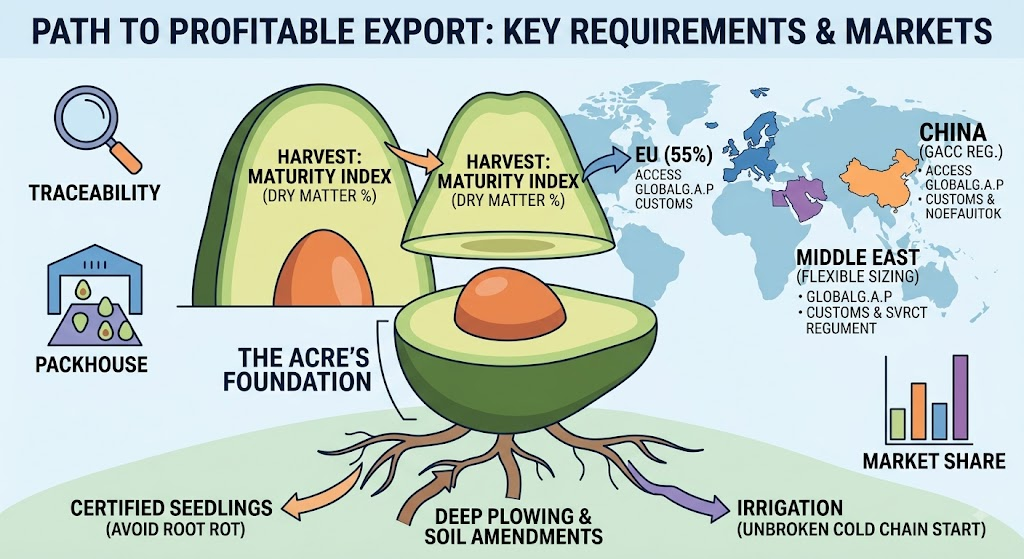
A healthy harvest yields little value without reliable, high-paying markets. In recent years, Kenya has solidified its position as Africa’s leading avocado exporter. In the 2024/25 season, the country exported approximately 110,000 tonnes, generating over Ksh 25 billion in revenue.
Understanding where the demand is coming from is critical for strategic planning:
1. The European Union (The Primary Buyer) The EU, particularly the Netherlands, France, and Spain, remains the largest and most established destination for Kenyan Hass avocados. European buyers pay premium prices but enforce incredibly strict quality and sustainability standards, primarily demanding GLOBALG.A.P certification.
2. China (The High-Growth Frontier) As of recent trade agreements, Kenyan avocados enjoy duty-free access to the vast Chinese market. China has an immense appetite for high-quality Hass avocados, and this market is rapidly transforming the economics for Kenyan farmers. However, accessing China requires specialized packhouse registration and adherence to strict pest-control mandates dictated by the General Administration of Customs of China (GACC).
3. The Middle East (The Emerging Hub) Markets like the United Arab Emirates (UAE) and Saudi Arabia are major consumers of both Hass and Fuerte varieties. The Middle East is often slightly more flexible regarding cosmetic sizing than the EU, though phytosanitary standards remain strict.
4. The Domestic Market & Avocado Oil Processing Not all avocados are exported. Kenya has a robust domestic consumption rate (nearly half of all production stays within the country). Furthermore, the processing sector is booming. Avocado oil processing jumped from 3,326 metric tons in 2024 to over 10,188 metric tons in 2025. Processors buy lower-grade, cosmetically imperfect, or slightly overripe fruits that cannot survive long sea voyages, providing a vital secondary income stream for farmers.
5. How to Access the Export Markets: Regulatory Requirements
Entering the export market is not as simple as loading a truck and driving to the airport. Avocado export is the most tightly regulated of Kenya’s fruit industries. To sell to international buyers, farmers and cooperatives must navigate a rigorous compliance pathway.
The Golden Rule: The 20–24% Dry Matter Content (Maturity Index)
Premature harvesting is the biggest threat to the Kenyan avocado brand. To prevent unripe fruit from reaching global markets and ruining reputations, the Agriculture and Food Authority (AFA) heavily regulates the harvest season.
You cannot harvest for export whenever you want. The AFA opens and closes the export window based on field maturity surveys. The decisive metric is “Dry Matter Content”—a scientifically proven proxy for the oil content inside the fruit.
- Before export clearance, Hass avocados must meet a minimum dry matter threshold of roughly 20% to 24%. Agrosocial Services
- Inspectors at the Jomo Kenyatta International Airport (JKIA) cargo terminal and at packhouses actively test consignments. If your fruit falls short, the entire shipment is rejected. Agrosocial Services
- Farmer Tip: You can test this in the field. Grate a known weight of fresh avocado flesh, dry it completely in an oven or dehydrator, and weigh it again. The dry weight divided by the fresh weight gives you your dry matter percentage. Agrosocial Services
The 5 Steps to Export Compliance
To actually get your fruit onto a ship or plane, you must meet these regulatory hurdles:
- AFA/HCD Registration: You must register with the Horticultural Crops Directorate (HCD). Furthermore, you are only legally allowed to transact with validly registered Horticultural Produce Marketing Agents (HPMAs). Royal Seedlings, Murang’a+ 1
- GLOBALG.A.P Certification: This is the baseline requirement for the European market. It proves you use safe agricultural practices, ethical labor, and minimal chemical interventions. For smallholder farmers who cannot afford the high individual audit fees, joining a cooperative to achieve “Group Certification” is the most viable path. Agrosocial Services
- KEPHIS Registration & Phytosanitary Certificates: The Kenya Plant Health Inspectorate Service (KEPHIS) ensures your farm and fruit are free from quarantine pests (like fruit flies). Every single export shipment requires a phytosanitary certificate. Royal Seedlings, Murang’a
- Traceability and Cold Chain Logistics: Buyers demand to know exactly which farm produced which box of fruit. Harvested avocados must be transported in rigid, ventilated crates—farmers caught using open pickup trucks or “Probox” vehicles risk losing their licenses. For sea freight (which is much cheaper than air freight and vital for large volumes), the fruit must pass through registered packhouses with strict pre-cooling and unbroken cold-chain management. Kilimo News+ 1
- GACC Registration (For China): If you are targeting the lucrative Chinese market, your farm and the specific packhouse handling your fruit must be independently audited and registered with Chinese customs authorities.
Packhouse sorting and temperature control are mandatory for export compliance. Source: Bloomberg / Bloomberg via Getty Images
6. The Broader Ecosystem: Beyond the Farm Gate
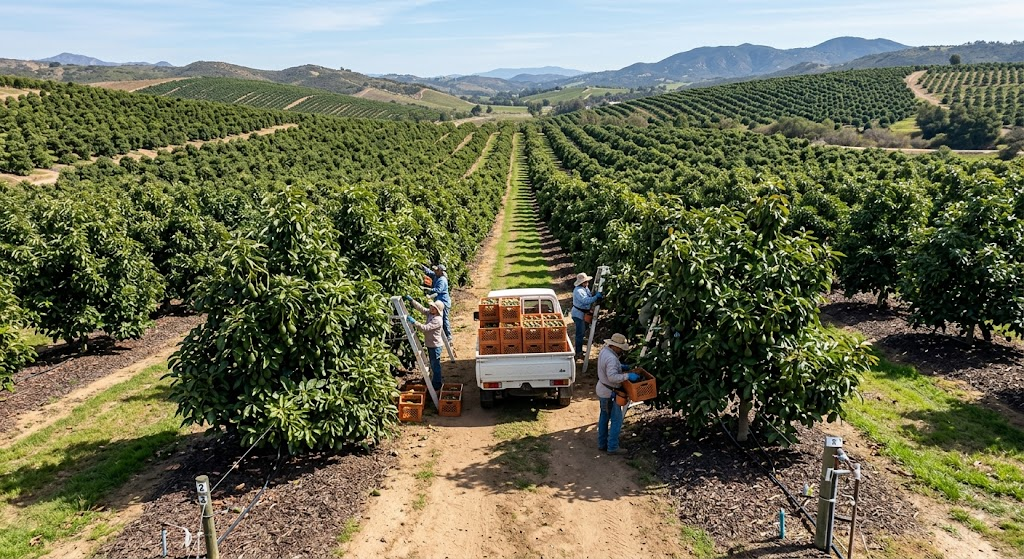
Owning an orchard is only one way to participate in Kenya’s expanding avocado economy. For entrepreneurs, commercial opportunities exist across the wider value chain:
- Certified Nursery Management: Producing and grafting high-quality, disease-free Hass seedlings is highly profitable given the massive ongoing expansion of orchard acreage.
- Irrigation & Agronomy Services: Specialized consulting on soil nutrition, canopy management, and installing efficient drip irrigation systems.
- Aggregation and Cold Storage: Bridging the gap between rural smallholders and major exporters in Nairobi by providing localized cold-room storage and crate-based transport.
- Processing (Value Addition): Commercial avocado oil extraction is rapidly growing, capturing value from Grade-B fruits that are perfectly healthy but cosmetically unfit for the fresh export market.
- Packaging: Manufacturing the specialized corrugated fiber crates and single-layer cardboard cartons required by international aviation and maritime standards.
Strategic Overview
Avocado farming in Kenya is not a get-rich-quick scheme; it is a serious, long-term commercial investment. The headline figure of Ksh 1.4 million per acre is attainable, but only for farmers who treat their land as a business.
Success requires balancing yield expectations against market volatility, meticulously managing production costs, and intimately understanding the regulatory environment. By planting quality seedlings, managing the orchard professionally, and adhering to strict export maturity indices like the 24% dry matter rule, Kenyan farmers can secure their place in one of the world’s most lucrative agricultural markets.
Never Miss a Story: Join Our Newsletter