Early Life & Family Background
Birth & Origins
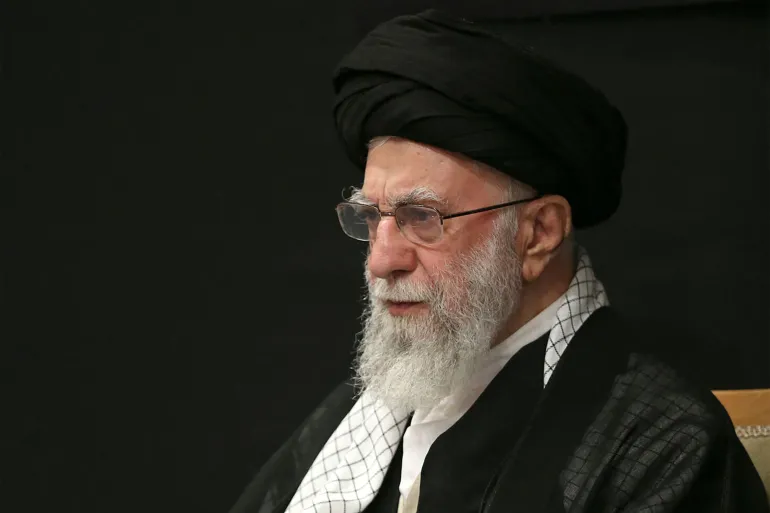
Ayatollah Ali Hosseini Khamenei was born on April 19, 1939 in the northeastern Iranian city of Mashhad, one of the holiest cities in Shia Islam as the burial place of Imam Reza.
Family
- He was the second of eight children born to Javad Khamenei, a well‑known Shia religious scholar (ulema), and Khadijeh Mirdamadi, whose father was also from a religious family.
- His family lived relatively modestly; they sometimes relied on charity to get by.
Religious Upbringing
- From a young age, Ali was raised in a deeply religious environment with strong ties to clerical learning and traditional Islamic values.
- His early exposure to religious teachers and mosque life influenced his lifelong involvement in Islamic scholarship and politics.
Education & Religious Training
Seminary Studies
- Khamenei began formal religious education at the Hojjatieh School in Mashhad and later the seminary in Qom, Iran’s foremost center for Shia Islamic studies.
- In Qom, he studied under prominent clerics including Ayatollah Borujerdi and Ayatollah Ruhollah Khomeini, the future leader of the 1979 Islamic Revolution.
Political Awakening
- While a teenager in the 1950s, he became influenced by anti‑monarchy religious activists and began developing critical views of the Shah’s regime, especially after speeches by militant clerics.
- By the early 1960s, he joined Khomeini’s clerical opposition and became actively involved in protests and underground movements against the monarchy.
Political Career & Rise to Power
Role Before the 1979 Revolution
- Khamenei participated in anti‑Shah activism and faced arrest several times for his involvement with the revolutionary clerical movement.
- He also spent time organizing religious students and spreading Khomeini’s message across Iran.
After the Revolution (1979)
When the Shah was overthrown in 1979 and the Islamic Republic established:
- Khamenei was named to the Revolutionary Council, a powerful body shaping the new state.
- He served in several key early Islamic Republic roles, including deputy defense minister and member of the Supreme Defense Council during the Iran–Iraq War (1980–88).
Presidency (1981–1989)
- In October 1981 Khamenei was elected President of Iran, a position he held for two terms (1981–1989) — one of the earliest major political roles in the post‑revolution government.
- His presidency was shaped by the context of the Iran–Iraq War and internal political struggles between factions within the Islamic Republic.
- Khamenei also survived a bombing attack in 1981 that left one of his hands partially paralyzed — a noteworthy moment in his early leadership.
Becoming Supreme Leader (1989)
Context
- After Ayatollah Ruhollah Khomeini’s death in 1989, Iran’s Assembly of Experts selected Khamenei as Supreme Leader — the highest authority in the Islamic Republic — despite him not being a Grand Ayatollah (the usual highest clerical rank).
Role & Powers
- As Supreme Leader, Khamenei had ultimate authority over Iran’s executive branch, military, judiciary, and foreign policy.
- He also controlled the Islamic Revolutionary Guard Corps (IRGC) and shaped Iran’s approach to the wider Middle East and nuclear program.
Ideology & Influence
Religious & Political Views
- Khamenei was a fervent supporter of the doctrine of Velayat‑e Faqih (Guardianship of the Islamic Jurist), which positions a senior religious leader as both head of state and guide to society.
- His worldview emphasized resistance to Western influence, especially from the United States and Israel, and strong support for allied Islamist groups regionally.
Writings & Thought
- He authored religious works and lectures, such as An Outline of Islamic Thought in the Quran (1974), exploring Islamic principles and society from a Shia clerical perspective.
Domestic Leadership & Controversies
- Khamenei’s rule was marked by strict control over political dissent, media, and civil liberties.
- Major protests — such as the Green Movement in 2009 and the Woman, Life, Freedom uprising in **2022 after the death of Mahsa Amini — were met with force.
- His government was criticized internationally and by human rights groups for alleged human rights abuses — including executions of political prisoners and suppression of minorities.
Foreign Policy & Regional Role
Khamenei’s leadership significantly shaped Iran’s role in the Middle East:
- He supported militant groups aligned against U.S. and Israeli interests, including Hezbollah and the Houthis.
- Iran’s nuclear program and tensions with Western powers grew notably under his guidance, especially after the U.S. withdrawal from the 2015 nuclear deal.
- He issued a religious ruling (fatwa) against nuclear weapons production, though Western officials questioned Iran’s nuclear intentions.
Death & Aftermath (2026)
- According to multiple reports, Ali Khamenei died at age 86 on February 28, 2026, in a joint U.S.–Israeli airstrike on Tehran.
- His death marked a historic turning point in Iran’s political system and raised immediate questions about succession and domestic political stability.
- A 40‑day national mourning period was declared, and reactions varied widely within Iran and across the region.
Personal Life & Family
- Khamenei was from a religious clerical family and maintained private family life compared to his public political role.
- Details of his spouse and children are generally less publicized in Western media, though Iranian profiles note he had a family and children involved in various professional and political circles.
Legacy
Polarizing Figure
- Revered by Iranian hard‑liners and supporters of the Islamic Republic’s ideology, but criticized by reformers, dissidents, and many international observers for authoritarian policies and human rights abuses.
Shaped Modern Iran
- Few figures in recent Iranian history have had as lasting an influence on Iran’s political system, society, and foreign policy as Ali Khamenei — from the revolutionary era through decades of leadership.
Facebook Comments Box
Never Miss a Story: Join Our Newsletter