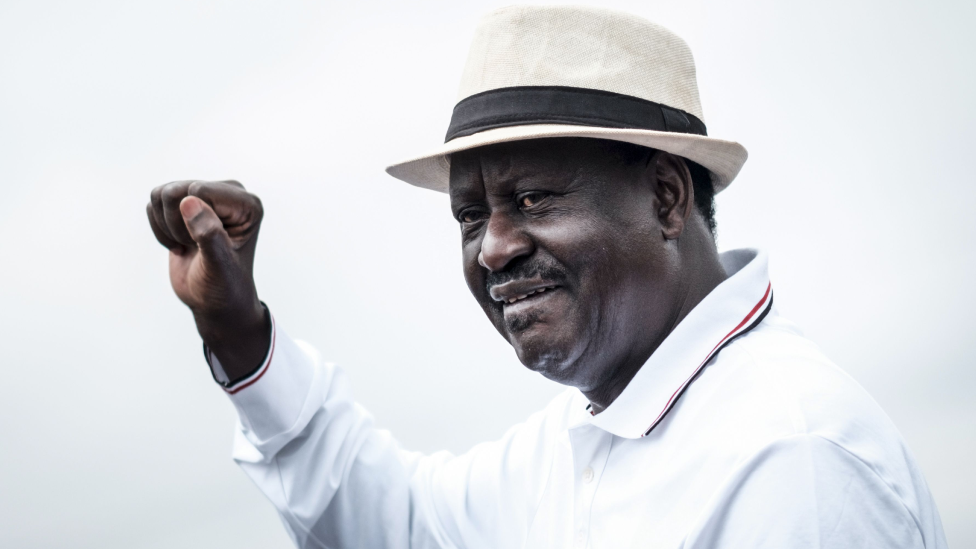
Raila Amolo Odinga Biography: The Unfinished Journey of a Relentless Reformer

Post

Raila Amolo Odinga Biography: The Unfinished Journey of a Relentless Reformer

Early Life and Family Roots

Raila Amolo Odinga was born on January 7, 1945, in Maseno, near Kisumu, in Kenya’s western highlands. He was the son of Jaramogi Oginga Odinga, one of Kenya’s foremost independence heroes and the country’s first Vice President, and Mary Juma Odinga, a devoted homemaker.

Growing up in a family deeply embedded in Kenya’s political awakening, Raila’s childhood was shaped by discussions of justice, freedom, and national destiny. His father’s principled opposition to authoritarianism left a lasting imprint on him — forging in the young boy a fearless commitment to democracy and social reform.

Education and Early Career

Raila’s education began at Kisumu Union Primary School, followed by Maranda Primary and Maranda High School. He proved a bright and determined student. In 1962, he earned a scholarship to study in the German Democratic Republic (East Germany).

At the Technical University of Magdeburg, he pursued a degree in Mechanical Engineering, graduating in 1970. The years in Germany not only honed his technical skills but also exposed him to progressive ideals — equality, social justice, and participatory governance — that would later influence his political philosophy.

Upon returning to Kenya, Raila worked briefly as a lecturer at the University of Nairobi before founding East African Spectre Ltd, one of the region’s earliest firms specializing in the manufacture of liquefied petroleum gas cylinders. His early foray into business reflected both entrepreneurial drive and a keen interest in industrial development.

Political Awakening and Detention

Raila’s political consciousness deepened under President Daniel arap Moi’s one-party regime. In 1982, following a failed coup attempt against the government, he was arrested and accused of treason — charges that saw him detained without trial for nearly seven years.

Those years of solitary confinement and uncertainty became a crucible that tested his resilience. When finally released, he emerged unbowed, his determination sharpened by the injustice he had endured. Raila would later describe that period as the defining test of his life — one that transformed him from an engineer into a lifelong fighter for democracy.

He was detained again in 1988 and 1989 for his continued advocacy of multiparty politics. In 1991, facing mounting threats, he fled into exile in Norway, where he continued to rally international attention toward Kenya’s struggle for political reform.

Return to Kenya and the Dawn of Multiparty Politics

The legalization of multiparty democracy in 1991 opened a new chapter. Raila returned home to join his father’s Forum for the Restoration of Democracy (FORD) movement, which sought to dismantle decades of one-party rule.

After his father’s death in 1994, internal divisions splintered the movement, leading Raila to form the National Development Party (NDP). His organizational energy and magnetic populism soon revived his political fortunes, positioning him as a key national figure by the late 1990s.

Ministerial Roles and Grand Coalition Government

In 2001, Raila joined President Daniel arap Moi’s government as Minister for Energy, marking a surprising but strategic alliance aimed at broadening democratic space. He later served as Minister for Roads, Public Works, and Housing under President Mwai Kibaki, where he spearheaded infrastructure reforms and advocated for devolution of power.

His most defining political role came after the 2007 general election, one of the most contested in Kenya’s history. Widespread post-election violence claimed over 1,300 lives and displaced hundreds of thousands. A power-sharing agreement brokered by former UN Secretary-General Kofi Annan led to the creation of a Grand Coalition Government in which Raila served as Prime Minister from 2008 to 2013.

During this period, he played a pivotal role in steering the 2010 Constitution, a transformative document that entrenched devolved government, strengthened the judiciary, and expanded citizens’ rights — arguably his greatest political legacy.

The Handshake and Later Political Pursuits

Though Raila contested five presidential elections — 1997, 2007, 2013, 2017, and 2022 — he never clinched the presidency. Yet, each contest reaffirmed his influence and staying power.

In 2018, his unexpected reconciliation with President Uhuru Kenyatta, famously dubbed “The Handshake,” eased political tensions and paved the way for a new spirit of national dialogue. The move was both praised as statesmanlike and criticized by some allies who viewed it as a betrayal of opposition ideals.

Later that year, Raila was appointed the African Union High Representative for Infrastructure Development, extending his influence across the continent and reaffirming his passion for connectivity and Pan-African unity.

Personal Life

Raila married Ida Oyoo Odinga in 1973, a union that produced four children — Fidel (deceased), Rosemary, Raila Jr., and Winnie. Ida, a respected educationist and activist, has been a constant source of support throughout his turbulent career.

Outside politics, Raila is known for his love of football — a lifelong supporter of Gor Mahia Football Club — and for his deep faith, often citing divine purpose as his guiding light through adversity.

Legacy

Raila Odinga’s life is a tapestry woven from courage, sacrifice, and the unrelenting pursuit of justice. To his supporters, he symbolizes Kenya’s conscience — the man who refused to bow to oppression. To his critics, he represents a stubborn idealist unwilling to concede defeat.

Yet, beyond politics, his story embodies Kenya’s struggle to define itself — between old wounds and new possibilities, between power and principle.

As history records his journey, Raila Amolo Odinga remains not merely a political figure but a living chapter in Kenya’s democratic evolution — a reminder that true reform often comes not from victory, but from perseverance.
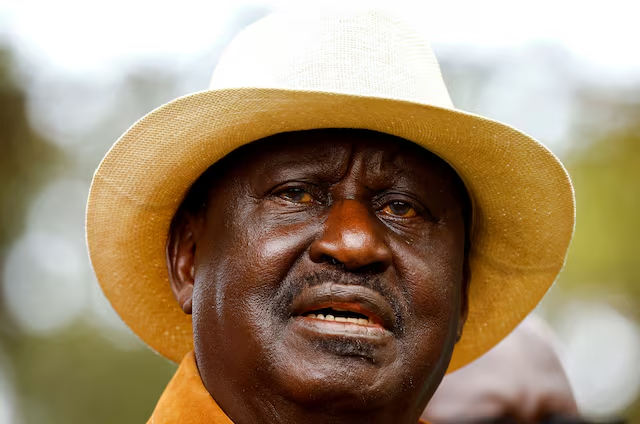

Former Kenyan Prime Minister Raila Odinga Dies at 80

Kenya’s long-serving opposition leader and former Prime Minister Raila Amolo Odinga has died at the age of 80, a senior official from his office has confirmed.

Odinga, who had been receiving medical treatment in Kochi, India, reportedly suffered a cardiac arrest on Wednesday and was pronounced dead shortly after being rushed to hospital, according to India’s Mathrubhumi newspaper.

A source close to the Odinga family told Reuters that final details on the circumstances surrounding his death would be communicated after consultations with relatives and doctors in India.

A Lifetime of Political Struggle

Odinga, one of Kenya’s most influential and resilient politicians, contested the presidency five times without success. His career, however, left a profound imprint on Kenya’s democratic journey—marked by decades of activism, imprisonment, and landmark political reforms.

He was instrumental in pushing for multiparty democracy in 1991 and later played a central role in ushering in Kenya’s 2010 Constitution, which entrenched devolution and expanded civil liberties.

Defining Moments

A pivotal figure during moments of national crisis, Odinga led mass protests following the disputed 2007 elections, which triggered Kenya’s worst post-independence violence. The unrest left more than 1,300 people dead and displaced hundreds of thousands, ultimately leading to the formation of a Grand Coalition Government, in which Odinga served as Prime Minister from 2008 to 2013.

Despite enduring political defeats, Odinga remained a symbol of reform, resilience, and opposition to authoritarianism. His supporters viewed him as the moral conscience of the nation—a leader who never abandoned his dream of a fairer, more united Kenya.

National and Global Reaction

News of Odinga’s passing has drawn condolences from across the world. Leaders from within the East African region and beyond have paid tribute to his lifelong dedication to democracy and regional integration.

The Kenyan government is expected to issue a formal statement, while ODM Party officials have confirmed that a national funeral committee will be constituted to coordinate memorial events both in India and Kenya.

Akon’s Wife Files for €100 Million Divorce Settlement Amid Dispute Over Assets

Internationally acclaimed singer and entrepreneur Akon is facing a high-stakes marital and financial dispute after his wife, Tomeka Thiam, filed for divorce and demanded a €100 million settlement. Court documents and legal sources suggest the case has turned more contentious than anticipated, with questions emerging over the ownership and control of the star’s assets.

The Divorce Filing and Settlement Demand

Tomeka Thiam initiated divorce proceedings after nearly 29 years of marriage, asserting that she helped build and manage various facets of Akon’s business empire. In her filing, she claims entitlement to a settlement of €100 million — a figure she frames as a fair reflection of her contributions and sacrifices over nearly three decades of partnership.

Thiam’s case hinges on her argument that many of Akon’s businesses—including those in music, real estate, and his philanthropic and energy ventures such as Akon Lighting Africa—benefit from her involvement and warrant equitable compensation.

Discrepancies in Asset Visibility

What most startled court officials, however, was a disclosure that Akon’s personal bank account shows only US$10,000 in balance. Despite the singer’s widely reported net worth in the tens of millions, the records suggest that much of his wealth is not held directly in his name but possibly under his mother’s name.

Legal analysts and observers speculate this arrangement may be a deliberate asset-protection strategy intended to shield property from potential claims in divorce proceedings. If indeed much of Akon’s wealth is legally outside his direct control, it could complicate the enforcement of any settlement award.

Legal and Strategic Implications

Experts in family and divorce law note the separation of legal ownership and beneficial interest could become a central battleground. If assets are not registered in Akon’s name, Thiam may need to mount legal arguments to trace or veil such assets. There is precedent in U.S. and international law for courts to “pierce” corporate or third-party holdings in divorce when an asset is held for the benefit of one spouse.

The €100 million figure itself may become a point of negotiation—or contention—especially if the court deems portions of Akon’s business interests as outside the scope of marital property. Further, scrutiny may intensify on financial disclosures, trusts, or shell entities used to manage revenue streams.

Public Silence and Awaited Responses

As of now, neither Akon nor his legal representatives have issued public statements in response to the filing. The high profile of both parties and the scale of the financial claim ensure that the case will remain under intense media and public scrutiny in the coming weeks.

Observers are particularly watching for:

  • Counterfilings or responses from Akon’s side contesting the valuation or ownership claims
  • Court orders for full financial disclosure and forensic accounting
  • Interim rulings on spousal support, temporary custody, or asset freezes
  • Settlement negotiations, mediation, or alternative dispute resolution efforts

The Full Benefits of Freshly Extracted Aloe Vera Gel

Few natural remedies match the versatility and healing power of freshly extracted aloe vera gel. Long treasured in traditional medicine and modern skincare alike, this humble green plant hides a clear, nutrient-rich gel that can nourish the body from the inside out. Unlike processed aloe products, freshly harvested gel retains all its enzymes, vitamins, and bioactive compounds — offering unparalleled benefits for skin, hair, digestion, and overall wellness.

1. Skin Health: Nature’s Moisturizer and Healer

Fresh aloe vera gel is a natural hydrator, perfect for all skin types. Its water-based structure allows it to penetrate deep into skin layers, locking in moisture without clogging pores. For those in Kenya’s dry or sunny regions, it helps prevent dryness and restores the skin’s soft, supple texture.

Beyond hydration, aloe’s anti-inflammatory and antimicrobial properties make it an effective treatment for acne, sunburn, rashes, and minor wounds. Compounds like aloin and glucomannan stimulate collagen production, speeding up the healing of burns, cuts, and scars. Vitamin C and E — powerful antioxidants found in fresh aloe — fight premature aging by neutralizing free radicals that damage the skin. With consistent use, wrinkles and fine lines become less visible, and the skin appears fresher and more youthful.

Aloe vera also helps fade dark spots and hyperpigmentation, thanks to its natural skin-lightening agents. Applying the gel daily can even out skin tone and give your face a gentle, natural glow.

2. Hair and Scalp: Reviving Dull, Dry Hair

If your hair is brittle, frizzy, or dull, fresh aloe vera gel can restore its vitality. When massaged into the scalp, aloe increases blood circulation and delivers essential nutrients directly to hair follicles. Its proteolytic enzymes repair dead skin cells on the scalp, encouraging stronger and faster hair growth.

For those battling dandruff or itchy scalp, aloe’s antifungal and antibacterial properties offer lasting relief. It removes flakes, unclogs pores, and restores scalp pH balance — making it an effective natural alternative to chemical anti-dandruff shampoos.

As a conditioner, aloe leaves hair soft, smooth, and easier to manage. Blending aloe gel with a few drops of coconut or castor oil creates a powerful homemade hair mask that strengthens strands and prevents breakage.

3. Digestive and Internal Health: Healing from Within

When purified and consumed in moderation, fresh aloe vera gel supports digestion and internal detoxification. It soothes the digestive tract, reduces acidity, and promotes regular bowel movements — especially for people suffering from constipation or acid reflux.

Aloe vera’s polysaccharides also nourish good gut bacteria, improving nutrient absorption and overall digestive balance. In traditional medicine, aloe juice is known to cleanse the liver and support the body’s natural detox systems.

In addition, its hydrating nature ensures that the body maintains optimal fluid balance — an essential part of digestive health in hot climates.

4. Immune Boost and Anti-Inflammatory Power

Fresh aloe vera gel contains more than 200 active compounds, including vitamins A, C, E, and B12, as well as zinc and magnesium. These nutrients work together to strengthen the body’s immune system.

Aloe’s anti-inflammatory enzymes — such as bradykinase — help reduce swelling and internal inflammation. People suffering from arthritis or chronic joint pain may find aloe supplements or juice beneficial in easing discomfort.

Its rich antioxidant profile also helps the body fight off infections, neutralize toxins, and slow cellular damage — supporting overall vitality and disease prevention.

5. Blood Sugar and Heart Health

Emerging studies show that aloe vera can help regulate blood sugar levels, making it potentially useful for people managing type 2 diabetes. Its compounds improve insulin sensitivity and reduce glucose levels in the bloodstream.

Furthermore, aloe has been found to lower cholesterol and triglycerides, helping protect the heart from plaque buildup and high blood pressure. When combined with a healthy diet and regular exercise, aloe vera contributes to a stronger, more resilient cardiovascular system.

6. Antimicrobial and Healing Properties

One of the most fascinating aspects of freshly extracted aloe vera is its ability to fight a wide range of bacteria, fungi, and viruses. This makes it a natural disinfectant for small wounds, insect bites, and skin irritations.

In oral care, aloe vera can help heal mouth ulcers, gum inflammation, and cold sores, thanks to its antiviral action. Many natural toothpaste brands now use aloe as a key ingredient for promoting oral hygiene and soothing sensitive gums.

7. Cosmetic and Everyday Uses

Fresh aloe vera is a multipurpose beauty secret. You can use it as:

  • A makeup primer or setting gel for a dewy finish
  • A natural aftershave to prevent bumps and irritation
  • A lip moisturizer for cracked lips
  • A brow and lash conditioner to encourage thicker growth
  • A base for DIY face masks, when blended with honey, turmeric, or cucumber

Because it’s gentle and non-toxic, aloe vera is safe for daily use, even on sensitive skin.

8. How to Use Fresh Aloe Vera Gel

  1. Cut a mature aloe leaf from the base of the plant.
  2. Slice it open and scoop out the clear, transparent gel (avoid the yellow latex layer beneath the skin).
  3. Apply the gel directly to the skin or hair, or blend it into juice for internal use.
  4. Store unused gel in a clean, airtight container in the refrigerator for up to a week.

For oral use, ensure it’s properly rinsed and purified, as the latex layer can cause digestive irritation if consumed.

9. Quick Reference Table

Benefit CategoryKey EffectsActive Compounds
Skin HealthHydration, acne control, anti-agingVitamins C & E, aloin, antioxidants
Hair & ScalpGrowth, dandruff control, shineEnzymes, antifungal agents
DigestionConstipation relief, liver detoxPolysaccharides, fiber
ImmunityStrengthens defense, reduces inflammationEnzymes, zinc, vitamins A & C
Heart & SugarRegulates cholesterol and glucosePhytosterols, amino acids
Cosmetic UseMakeup base, aftershave, glow enhancerMoisturizing polysaccharides

The Power of Going Fresh

In a world flooded with synthetic skincare products, freshly extracted aloe vera gel stands out as a simple yet potent natural remedy. It hydrates, heals, and nourishes — all without artificial chemicals. Whether applied topically or taken internally, aloe vera supports holistic well-being from head to toe.

In Kenya, where the climate supports thriving aloe plants, cultivating your own aloe vera can save costs while giving you a steady supply of pure, organic skincare straight from nature’s pharmacy.

AI and the Bodaboda: How Artificial Intelligence Could Disrupt Kenya’s Informal Jobs

On a normal morning in Nairobi, bodaboda riders weave through traffic jams, ferrying office workers, parcels, and hope. Yet, behind this noisy rhythm of enterprise, a quiet revolution is gathering speed — Artificial Intelligence (AI).

As self-learning algorithms creep into logistics, transport, and retail, Kenya’s informal workers — from riders to vendors — face a new kind of uncertainty. Could AI soon replace their hustle, or will it become the tool that empowers them for the future?

According to the Kenya National Bureau of Statistics (KNBS), nearly 83 percent of Kenyans earn their income through the informal sector. That’s about 15 million people, forming the backbone of Kenya’s economic resilience. The looming wave of automation, therefore, is not just a question of technology — it’s about livelihood, survival, and national identity.

The Invisible Backbone of Kenya’s Economy

The bodaboda sector illustrates the power and vulnerability of informal labor. The National Transport and Safety Authority (NTSA) estimates that over 1.5 million riders operate across the country, generating more than KSh 60 billion annually. For many youth, it’s not just transport — it’s financial independence.

Yet, the same motorcycles that symbolize hustler freedom may soon face existential disruption. AI-powered ride-hailing algorithms, autonomous delivery systems, and predictive maintenance tools are transforming how urban logistics function.

In developed economies, self-driving delivery vehicles and drone-based logistics are already being tested. In Kenya, homegrown startups and global tech firms are experimenting with AI-driven fleet management, cashless transport, and delivery route optimization — innovations that could one day make some manual roles redundant.

Automation Creeps into Informal Spaces

Automation rarely announces itself; it arrives quietly, embedded in convenience. For instance, ride-hailing apps that assign riders based on speed, proximity, and ratings already rely on AI decision-making. Cashless payment systems in matatus and mobile delivery services powered by route-learning algorithms represent early stages of this shift.

A recent study by McKinsey & Company suggests that up to 50% of work activities globally could be automated by 2030. In Africa, where informal work dominates, the disruption will be deeply social.

SectorEmerging AI ImpactPotential Job Risk
Bodaboda & DeliveryRoute optimization, autonomous vehiclesMedium–High
Retail & Street VendingSmart kiosks, digital paymentsMedium
Jua Kali Manufacturing3D printing, automated cutting toolsLow–Medium
Logistics & DispatchAI-driven fleet analyticsHigh

While AI promises efficiency and safety, it also reshapes how money circulates — who earns, who gets replaced, and who adapts.

The Fear Factor — Replacement or Empowerment?

Many Kenyan workers perceive AI as a distant phenomenon — until they realize they’re already interacting with it. Digital ride-hailing apps like Bolt or Uber rely on machine learning to match riders and customers, track productivity, and predict demand spikes.

The fear is understandable. AI systems are designed to minimize human input, which translates to fewer people needed for coordination, dispatch, or manual data handling.

However, experts argue that the real issue is not replacement, but transition. Dr. Angela Mumo, a Nairobi-based technology policy analyst, explains:

“AI doesn’t have to kill informal work — it can make it smarter. The key is preparing workers to operate within these new systems rather than outside them.”

Indeed, new job categories could emerge. For example, AI-assisted fleet tracking requires technicians, data analysts, and system operators. Drone maintenance, data labeling, and digital mapping could open up new informal job niches — if workers are retrained and digitally included.

Policy Blind Spots — The Missing AI Safety Net

Kenya has made remarkable progress in digital innovation — from mobile money to digital IDs. Yet, when it comes to protecting workers from automation shocks, the country lacks a comprehensive national AI transition strategy.

The Ministry of Information, Communications and the Digital Economy unveiled the Digital Economy Blueprint in 2022, emphasizing innovation, data, and infrastructure. However, it remains silent on what automation means for the millions outside formal employment.

Without intervention, Kenya risks a technological class divide, where educated urban youth transition smoothly into the digital economy while millions of informal workers are left behind.

“We are preparing for a future we don’t understand,” laments Boniface Otieno, a bodaboda operator in Nairobi’s South B. “We see new delivery robots in videos, but nobody tells us how we will fit in when machines come.”

This sentiment reflects a widespread anxiety that technological progress might serve the few while displacing the many.

How to Future-Proof Kenya’s Hustle Economy

Kenya’s informal economy has thrived precisely because it adapts fast. The same ingenuity that birthed M-Pesa and made bodabodas indispensable can help workers survive AI disruption — but only if guided by deliberate strategy.

1. Digital Upskilling for Informal Workers:
County governments and local cooperatives can introduce AI literacy and basic tech training through vocational centers. Even a foundational understanding of mobile data analytics or app management can help informal workers stay relevant.

2. Inclusive AI Policy:
The national AI framework currently in draft form should involve informal sector unions and SACCOs in consultations. Their inclusion ensures real-world voices shape Kenya’s automation roadmap.

3. Ethical Technology Deployment:
Kenyan startups should build AI solutions that are assistive, not exclusive — tools that help riders find safer routes or optimize fuel use, rather than algorithms that replace them entirely.

A Moment of Choice

AI will not descend on Kenya in one dramatic swoop; it will seep in through logistics, payments, and city systems. But the decisions made now — about training, policy, and equity — will determine whether AI becomes a tool for empowerment or exclusion.

The bodaboda rider, the jua kali artisan, and the street vendor represent the creative pulse of Kenya’s economy. To leave them behind in the AI era would be to forget the very spirit that makes the nation’s hustle unstoppable.

Artificial Intelligence is here — not as a threat, but as a test. Kenya must decide whether its informal workers will remain passengers or become drivers of the digital revolution. The answer will shape not just the economy, but the soul of Kenya’s future work.

The Lost Lineages: What Happened to the Africans Enslaved in Arabia?

When discussions on slavery arise, the transatlantic slave trade often dominates global memory. We picture ships crossing the Atlantic, sugar plantations in the Americas, and the rise of Black populations across the Caribbean and the United States. Yet, another slave route — older, quieter, and far less documented — stretched eastward from Africa across the Sahara, the Red Sea, and the Indian Ocean. This was the Arab slave trade, which took millions of Africans to Arabia, Persia, the Ottoman Empire, and even India over more than a millennium.

Today, while descendants of enslaved Africans in the Americas form large, visible communities like African Americans or Afro-Brazilians, their counterparts in the Arab world seem to have disappeared into history. Where did they go? The answer lies in the unique patterns of assimilation, religion, gender, and social structures that shaped the Arab slave trade.

The Forgotten Routes: How the Arab Slave Trade Operated

The Scope and Direction of the Trade

The Arab slave trade, sometimes called the Indian Ocean or trans-Saharan slave trade, began as early as the 7th century and continued into the 20th century. Enslaved Africans were transported from regions such as modern-day Tanzania, Mozambique, Ethiopia, Sudan, Chad, and Mali across vast deserts and seas.

There were three main routes:

  1. The Trans-Saharan Route, where West and Central Africans were moved northward to North Africa and the Middle East.
  2. The Red Sea Route, connecting the Horn of Africa with Arabia.
  3. The Indian Ocean Route, which linked East Africa with Oman, Persia, and India.

Unlike the Atlantic trade, which was fueled by industrial plantation economies, the Arab slave trade served diverse needs — domestic labor, military service, agricultural work, concubinage, and palace service.

Numbers and Scale

Historians estimate that between 10 and 18 million Africans were enslaved through Arab-controlled routes over roughly 1,200 years. Although fewer than the 12–15 million shipped across the Atlantic, the time span and diffusion made its impact immense.

A 19th-century French traveler once observed slave caravans crossing the Sahara with hundreds of captives, many dying from thirst or exhaustion. Mortality rates were staggering — sometimes as high as 30–40% before reaching destination markets such as Mecca, Basra, Muscat, and Cairo.

What Became of Them?

Assimilation Through Religion and Marriage

One reason descendants of Africans enslaved in Arabia are less visible today is assimilation. Islam, which forbade racial discrimination among believers, created a pathway for manumitted slaves to integrate into Muslim society. Upon conversion, freed Africans could marry locals and gain social acceptance — at least in theory.

Over generations, intermarriage diluted visible African ancestry. Skin color was not always erased, but cultural identity shifted toward Arabic and Islamic norms. In contrast to the Americas, where slavery created a racial caste system, the Middle East emphasized religion as the main social marker.

Gender and Social Roles

The gender composition of enslaved Africans in the Arab world also influenced demographic outcomes. While the Atlantic trade primarily exported young men for plantation work, the Arab trade captured a higher proportion of women and children for domestic labor and concubinage.

Female captives often bore children with their masters, and those children were legally free. Over centuries, this created large numbers of people of partial African descent who blended into local Arab populations. Thus, no distinct “Black Arab” group equivalent to African Americans developed.

Manumission and Cultural Absorption

Islamic law encouraged manumission as a pious act. Freed slaves could become clients or “mawali” of Arab tribes. Though social barriers persisted, the religious framework facilitated absorption. In essence, the system erased the enslaved by integrating them, rather than isolating them in racialized hierarchies.

The Geography of Forgotten Descendants

The Afro-Iraqis

Southern Iraq hosts one of the most visible African-descended populations in the Middle East — the Afro-Iraqis, numbering an estimated 500,000 to 1.5 million. Their ancestors were brought from East Africa, particularly Tanzania and Zanzibar, as laborers in the 9th century to work on salt marsh plantations.

They became known historically through the Zanj Rebellion (869–883 CE), a massive uprising of African slaves against the Abbasid Caliphate. Although the rebellion was crushed, it revealed the scale of African enslavement in the region.

Today, Afro-Iraqis live mainly around Basra, where they face social discrimination and underrepresentation. However, their communities have preserved African-influenced music and rituals, maintaining a fragile link to their heritage.

The Afro-Iranians

Along Iran’s southern coast, particularly in Hormozgan and Bushehr provinces, live the Afro-Iranians — descendants of East African slaves once brought through Omani-controlled trade routes. Some were domestic servants; others worked in agriculture and pearl diving.

Despite centuries of integration, physical traits and oral histories keep the memory of African roots alive. Afro-Iranian music, such as the Zar spirit possession ritual, bears unmistakable African rhythms and instruments.

The Muhamasheen of Yemen

In Yemen, dark-skinned communities known as Muhamasheen (“the marginalized”) or Akhdam are widely believed to descend from African slaves brought through the Red Sea trade. They often live in slums and are confined to menial jobs such as street cleaning.

Although Islam theoretically prohibits racial discrimination, centuries of social stratification have kept the Muhamasheen at the bottom of Yemen’s hierarchy. Efforts by rights groups to improve their living conditions continue to face resistance.

The Afro-Omanis and the Swahili Connection

Oman played a dual role as both a consumer and exporter of enslaved Africans. The Omani empire controlled Zanzibar in the 18th and 19th centuries, using it as a hub for the East African slave trade. Many enslaved Africans were transported to Oman itself for domestic work, date farming, or the pearl industry.

Modern Oman still has citizens of African descent, though many identify fully as Omani. Ironically, after the British abolition of the slave trade in the late 19th century, thousands of freed Africans settled in East Africa — giving rise to the Swahili-Arab blend still evident along the coast of Kenya and Tanzania.

The Siddis of India and Pakistan

Across the Arabian Sea, the Siddis (also known as Habshi) of India and Pakistan represent another branch of African diaspora linked to Arab trade. Descendants of Africans brought as slaves, soldiers, and sailors, they settled along India’s western coast more than 800 years ago.

Today, around 100,000–200,000 Siddis live in Gujarat, Karnataka, and Hyderabad. Despite assimilation into Indian languages and religions, their African identity remains visible through dance, music, and physical features. Some Siddi rulers, such as the Habshi governors of Gujarat, even rose to political power — a rare exception in slave history.

Why the Arab Slave Trade Left Little Visible Legacy

The Structure of Enslavement

Unlike the transatlantic system, which concentrated slaves on plantations, the Arab world distributed enslaved people across small households. This diffusion prevented the formation of large, self-sustaining African communities.

Moreover, because Islam allowed concubinage and emphasized paternal lineage, mixed-race children were absorbed into their father’s family — erasing visible African identity within a few generations.

Mortality and Castration

Another grim reason for the disappearance of African-descended lineages lies in the castration of male slaves, especially those intended for palace service. Eunuchs were highly valued in royal courts, but their sterilization prevented reproduction. Historian Ronald Segal estimates that up to 80% of male slaves in some regions were castrated, drastically reducing the possibility of African ancestry surviving through male lines.

Cultural and Historical Silence

While Western nations publicly confronted their slave-trading pasts under abolitionist pressure, many Arab societies treated slavery as a private domestic institution rather than an economic system. As a result, records were sparse, and public memory was subdued.

Even today, discussing slavery in parts of the Middle East remains sensitive. The lack of census data and reluctance to address racial history contribute to the invisibility of Afro-Arab descendants.

Modern Recognition and the Push for Identity

Emerging Afro-Arab Voices

In recent decades, Afro-descendant groups across the Middle East have begun to reclaim their histories. Afro-Iraqis have formed cultural associations; Afro-Iranians organize festivals celebrating African heritage; and Yemen’s Muhamasheen are gaining political attention from human rights organizations.

Social media has also amplified awareness. Young Afro-Arabs now use platforms like TikTok and Instagram to challenge colorism and demand recognition in societies that have long denied their African roots.

The Importance of Historical Recovery

Uncovering these lost lineages matters not only for the descendants but for all societies touched by the trade. Understanding that millions of Africans were taken east — not just west — reshapes global awareness of slavery’s full scope.

It also corrects the misconception that Arab slavery was “milder.” While its social structure differed, the human cost — forced migration, family separation, and exploitation — was profound.

The Vanished and the Remembered

So, where are the Africans enslaved in Arabia? They are not gone — they are living among us, often unnoticed. They are the Afro-Iraqis by the Shatt al-Arab, the Muhamasheen of Yemen’s cities, the Afro-Omanis on the Gulf, the Siddis of Gujarat, and the Afro-Iranians of Hormozgan.

Centuries of assimilation, intermarriage, and silence may have blurred their visibility, but their presence endures — in music, in oral history, in the skin tones of mixed families, and in the genetic and cultural mosaics of the Middle East and Indian Ocean world.

The story of the Arab slave trade is not one of extinction, but absorption — a quieter tragedy that demands recognition. As scholars and descendants work to document these forgotten histories, the world begins to see that Africa’s lost children did not vanish; they were woven, often invisibly, into the very fabric of the regions that enslaved them.

By Albert Simiyu Wanjala (Journalist / Author / Digital Marketer)

The Most Important Innovation in Travel Since Airplanes: The Enence AI Instant Translator

Breaking Language Barriers: A Game-Changer for Global Travelers

Traveling the world is thrilling—new cultures, breathtaking sights, and unforgettable encounters. Yet, one obstacle continues to frustrate even the most seasoned explorers: language barriers. Whether you’re wandering through Tokyo, bargaining in Marrakech, or ordering coffee in Paris, not speaking the local language can turn simple interactions into stressful experiences.

Traditional solutions—like phrasebooks or language classes—require time, money, and dedication. But what if you could communicate instantly and confidently, no matter where you go?

Enter the Enence AI Instant Translator, a breakthrough device that makes real-time, two-way communication possible in dozens of languages. Designed by a visionary Japanese programmer, it’s already being hailed as the most transformative travel innovation since the invention of commercial flight.

Meet the Genius Behind the Innovation

The Enence story begins with Tom Johnson, a world-class software engineer and AI expert who spent years working with major tech firms. While experimenting with advanced voice-recognition systems, Johnson set out to solve a challenge that eluded even the biggest players in artificial intelligence: creating an AI that could listen, understand, and translate any spoken language—instantly.

After years of experimentation, Johnson’s breakthrough came in the form of a compact, adaptive AI-language model capable of decoding dialects, accents, and even mispronunciations with astonishing accuracy. His discovery paved the way for the creation of a pocket-sized translator that anyone could use—no training, no setup, just seamless communication.

The Birth of Enence: Real-Time Translation at Your Fingertips

Working with a team of fellow engineers and linguists, Johnson transformed his AI prototype into a consumer-ready device: Enence, the portable instant translator that turns global communication into second nature.

Using Enence is remarkably simple. Just press a button, speak your phrase, and within 1.5 seconds, the device delivers a clear voice translation in your chosen language. Press the second button, and the person you’re speaking to can respond—Enence instantly translates their words back to you. Its advanced noise-cancellation technology ensures clear, accurate translations even in busy public spaces.

What Makes Enence Different

Unlike conventional translation apps or bulky headsets, Enence stands out because of its cutting-edge AI engine that keeps learning as you use it. Key features include:

  • Adaptive Learning: The AI improves accuracy with each use, refining its understanding of speech patterns and phrases.
  • Contextual Awareness: It translates based on meaning, not just literal words—ensuring natural, human-like conversations.
  • Dialect & Accent Recognition: From regional Spanish to African French, Enence adapts to local nuances.
  • Lightning-Fast Performance: Translations happen in real time, without lag or awkward pauses.

Enence isn’t just a translation device—it’s a bridge between cultures.

A User Experience That Feels Effortless

The Enence setup is quick and intuitive:

  1. Order the device via the official website (currently at a 70% discount).
  2. Connect it to your smartphone’s Wi-Fi or data network via the Enence app.
  3. Press, Speak, and Listen—communication flows naturally in any supported language.
  4. Repeat and Respond—the other person speaks back, and you hear the translation instantly.

From business meetings to emergency situations abroad, Enence makes every conversation fluent and stress-free.

Critical Acclaim and Traveler Testimonials

Since its debut, Enence has earned glowing reviews worldwide. Tech analysts call it “the next frontier of travel AI,” while travelers share stories of transformed experiences:

“Enence completely changed my trip to Japan. I could finally talk with locals and truly connect.” — Kimberly Jones

“I used Enence in Germany, and every conversation was effortless. It made traveling fun again.” — Karen Green

“No more misunderstandings in hotels or restaurants—this device just works.” — Sam Harris Jr.

The consensus is clear: Enence delivers on its promise to make global travel smoother, safer, and more personal.

Why It’s Worth Every Penny

Despite its advanced AI design and years of development, Enence remains surprisingly affordable. A limited-time 70% discount is currently available on the official website, making it accessible to everyday travelers who want to explore the world without limits.

With features like:

  • 4-day battery life,
  • High-precision microphones,
  • Powerful onboard processor, and
  • Support for dozens of global languages,

Enence redefines what’s possible for travelers, entrepreneurs, and anyone passionate about human connection.

If you’ve ever wished for a world without language barriers, this is your moment. The Enence AI Instant Translator turns that dream into reality—combining advanced AI, portability, and simplicity in one sleek device.

Travel smarter. Speak freely. Experience the world without limits.

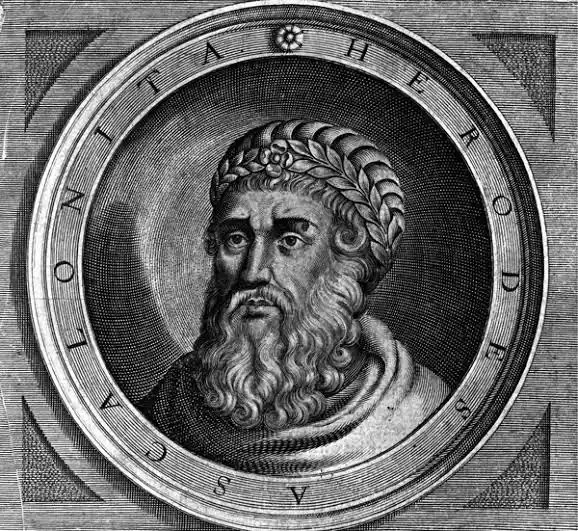
The Herodian Dynasty: From Idumaean Origins to the Last Herod

Few dynasties in ancient history balanced power, politics, and survival as precariously as the Herodian dynasty. Born from Edomite roots and legitimized under Roman favor, the Herods ruled Judea during one of the most turbulent centuries in Jewish and Mediterranean history. Their story bridges the fall of the Hasmoneans, the rise of Rome’s eastern empire, and the early years of Christianity.

This article traces the dynasty’s full arc — from its founder, Antipater the Idumaean, to its last scion, Herod Agrippa II — and explains how family ambition, Roman politics, and religious tension shaped their reign.

I. Origins: The Idumaean Foundation

The Herodian dynasty began not with a king but with a clever political operator — Antipater the Idumaean, the father of Herod the Great. The Idumaeans were descendants of the ancient Edomites, living south of Judea. In the 2nd century BC, the Hasmonean ruler John Hyrcanus I conquered Idumaea and forced its inhabitants to convert to Judaism. Antipater’s family thus became nominally Jewish, though ethnically distinct from the Judeans.

Antipater rose under the late Hasmonean kings as a skilled administrator and diplomat. He supported Hyrcanus II, one of the feuding Hasmonean brothers, in a bitter civil war against Aristobulus II. When Roman general Pompey the Great intervened in Judean politics around 63 BC, Antipater shrewdly aligned himself with Rome. By 47 BC, Julius Caesar rewarded his loyalty, appointing him procurator of Judea — effectively the Roman-backed ruler behind the scenes.

Antipater’s assassination in 44 BC, amid chaos following Caesar’s own death, left his son Herod as his heir — and the real founder of the dynasty’s royal line.

II. Herod the Great: The Builder King (37–4 BC)

Herod the Great, the most famous of the dynasty, was a master of survival. Ambitious, ruthless, and politically astute, he navigated the shifting allegiances of Rome’s civil wars, first supporting Mark Antony and later currying favor with Octavian (Augustus) after Antony’s defeat.

In 40 BC, the Roman Senate officially proclaimed Herod King of the Jews, though he had to fight for his throne. By 37 BC, after bloody campaigns against remnants of the Hasmonean line, Herod secured full control of Judea as Rome’s client-king.

Achievements and Reign

Herod’s rule was marked by monumental building projects and political maneuvering designed to impress Rome and pacify his subjects:

  • Reconstruction of the Second Temple in Jerusalem — a project of immense religious and architectural significance.
  • Construction of Caesarea Maritima, a grand port city dedicated to Emperor Augustus.
  • Fortresses such as Masada and Herodium, symbolizing his paranoia and military foresight.
  • Cultural integration: blending Roman architecture with Jewish religious observance.

Yet Herod’s reign was also notorious for its brutality. He executed several of his wives and sons on suspicion of treason, including Mariamne I, a Hasmonean princess he had married to legitimize his rule. Roman Emperor Augustus reportedly quipped, “It is better to be Herod’s pig than his son.”

Herod died in 4 BC, leaving behind a divided kingdom — and a dynasty destined for fragmentation.

III. Division of the Kingdom: Herod’s Sons and Successors

After Herod’s death, Rome refused to allow another unified Judean kingdom. Instead, Augustus divided the realm among Herod’s sons, creating a patchwork of tetrarchies and principalities.

SuccessorTitle & TerritoryReignKey Events
Herod ArchelausEthnarch of Judea, Samaria, Idumea4 BC – AD 6Ruled poorly; complaints led Rome to depose him. Judea became a Roman province.
Herod AntipasTetrarch of Galilee and Perea4 BC – AD 39Noted for executing John the Baptist; appears in the trial of Jesus. Built Tiberias.
Philip the Tetrarch (Herod Philip II)Tetrarch of Iturea, Trachonitis, Batanea4 BC – ~AD 34A mild ruler who developed new cities; his lands later added to Syrian province.

Archelaus: The Failed Heir

Herod Archelaus inherited the core of his father’s kingdom — Judea itself. But his oppressive rule and disregard for Jewish law provoked revolts. After numerous complaints, Emperor Augustus deposed him in AD 6, turning Judea into a Roman province under a prefect. This shift paved the way for direct Roman governance — the system that would later include Pontius Pilate.

Antipas: The Political Survivor

Herod Antipas, ruling Galilee and Perea, lasted much longer. His reign overlapped with the ministries of John the Baptist and Jesus of Nazareth, making him one of the New Testament’s most recognizable Herods. Antipas built the city of Tiberias on the Sea of Galilee and maintained a delicate balance between Rome and local tradition.

But his downfall came from ambition. When he sought the title of “king” from Emperor Caligula, his nephew Agrippa I accused him of conspiracy. Caligula exiled Antipas to Gaul in AD 39.

Philip: The Quiet Ruler

Herod Philip II (often simply called Philip the Tetrarch) governed the northern territories with relative peace. He was known for fair administration and urban development — including the founding of Caesarea Philippi. He died childless around AD 34, and his domain briefly fell under Syrian control.

IV. The Herodian Revival: Agrippa I and His Children

Though Herod’s sons lost much of their father’s power, the dynasty revived under Herod Agrippa I, a grandson of Herod the Great and Mariamne I. Educated in Rome and a close friend of Emperors Caligula and Claudius, Agrippa leveraged imperial favor to restore much of his grandfather’s kingdom.

Agrippa I (AD 41–44)

Claudius granted Agrippa I rule over Judea, Samaria, and Galilee, effectively reuniting the Herodian territories. His reign was brief but significant:

  • He sought to appease Jewish leaders, enforcing some religious laws neglected by earlier Herods.
  • Expanded Jerusalem’s fortifications.
  • According to the Book of Acts (12:1–23), he persecuted early Christians and died suddenly — interpreted by some as divine judgment.

Agrippa’s death in AD 44 ended the last period of full Herodian control over Judea. Rome resumed direct rule, but the family line continued in smaller principalities.

Agrippa II and the End of the Dynasty

Agrippa I’s son, Herod Agrippa II, inherited a smaller realm — first Chalcis, then parts of the northern territories. Like his father, he was raised in Rome and remained loyal to the empire.

Agrippa II is best remembered for his role during the early Christian era. The Book of Acts describes his encounter with the Apostle Paul, where Paul defends his faith before the king (Acts 25–26).

During the First Jewish Revolt (AD 66–73), Agrippa sided with Rome, urging the rebels to surrender — a stance that alienated him from his people. After Jerusalem’s destruction in AD 70, he continued ruling under Roman oversight until around AD 92–100, dying childless. With him, the Herodian dynasty came to an end.

V. Family Tree Overview

Below is a condensed genealogical outline showing the main succession from founder to the final ruler:

Antipater the Idumaean
   └── Herod the Great (King of Judea, 37–4 BC)
         ├── Herod Archelaus (Ethnarch, 4 BC–AD 6)
         ├── Herod Antipas (Tetrarch, 4 BC–AD 39)
         ├── Philip the Tetrarch (4 BC–AD 34)
         ├── [other children and marriages]
         │
         └── Grandchildren:
              ├── Herod Agrippa I (King of Judea, AD 41–44)
              │     └── Herod Agrippa II (Tetrarch/King, AD 48–~92)
              └── Herod of Chalcis (King of Chalcis, AD 41–48)

VI. Power, Politics, and Identity

The Herods were political chameleons. Their survival depended on mastering Roman patronage while managing Jewish legitimacy. Yet those two identities constantly clashed.

  • To Rome, the Herods were client kings — useful intermediaries between empire and province.
  • To their Jewish subjects, they were often outsiders: Idumaean converts ruling by foreign mandate.

This tension shaped nearly every Herodian decision — from Herod the Great’s rebuilding of the Temple (a bid for religious approval) to Antipas’s careful diplomacy and Agrippa I’s pious posturing.

Even their personal lives reflected political calculation: Herod’s many marriages were aimed at securing alliances with the Hasmoneans, Nabataeans, and other neighboring dynasties.

VII. Legacy

By the time Agrippa II died, Judea had changed forever. The Jewish Temple lay in ruins, Roman legions occupied the land, and Christianity was spreading through the empire — partly shaped by encounters with the Herodian line.

The Herods left behind:

  • Architectural legacies — the Western Wall (a remnant of Herod’s Temple), Masada, and Caesarea remain enduring monuments.
  • Cultural footprints — their rule is interwoven with the narratives of Jesus, John the Baptist, and Paul.
  • Political lessons — their dynasty exemplifies how client kingships functioned under Roman imperialism: powerful yet fragile, privileged yet expendable.

In many ways, the Herods were symbols of transition — the last kings of Judea and the first governors of a Romanized Palestine.

VIII. Summary Table: From Founder to Final Ruler

RulerRelationReignDomainHistorical Significance
Antipater the IdumaeanFounderc. 47–44 BCJudea (as procurator)Established Herodian power under Rome
Herod the GreatSon37–4 BCKing of JudeaBuilder of the Second Temple; ruthless ruler
Herod ArchelausSon4 BC–AD 6Judea, Samaria, IdumeaDeposed by Rome; Judea becomes a province
Herod AntipasSon4 BC–AD 39Galilee, PereaRuler during Jesus’ time; exiled by Caligula
Philip the TetrarchSon4 BC–AD 34Northern territoriesPeaceful rule, urban development
Herod Agrippa IGrandsonAD 41–44Reunited JudeaLast Herod to rule the full kingdom
Herod of ChalcisRelativeAD 41–48ChalcisControlled a small principality
Herod Agrippa IIGreat-grandsonAD 48–~92Northern regionsLast Herodian ruler; ally of Rome

IX. Conclusion

The Herodian dynasty began with an outsider’s ambition and ended with an insider’s loyalty. From Antipater’s rise through diplomacy to Herod the Great’s kingdom, and finally Agrippa II’s Roman allegiance, the family embodied both the possibilities and perils of ruling between two worlds.

Their century-long saga was one of adaptation, ambition, and ultimately absorption into Rome’s imperial machinery. Yet their mark on history endures — not only in stone and scripture but as a case study in how dynasties born from compromise can both shape and be undone by the empires they serve.

Appendix: Origins and Biblical Connections

Who Were the Edomites?

The Edomites were descendants of Esau, the twin brother of Jacob (Israel), according to the Hebrew Bible (Genesis 25–36).
While Jacob’s descendants became the Israelites, Esau’s descendants settled in the rugged hill country southeast of the Dead Sea — the land known as Edom.

Key Facts About the Edomites

  • Location: Edom stretched from the southern borders of Judah down toward the Gulf of Aqaba — roughly modern southern Jordan.
  • Language and Culture: They spoke a dialect closely related to Hebrew and shared many customs with the Israelites.
  • Relations with Israel: Often hostile. The Old Testament records centuries of tension — Edom refused Israel passage during the Exodus (Numbers 20:14–21), and David later subjugated them (2 Samuel 8:13–14).
  • Conquest and Assimilation: In the 2nd century BC, the Hasmonean ruler John Hyrcanus I conquered Edom (then called Idumaea) and forced its people to adopt Judaism, including circumcision. From that point on, the Idumaeans were legally “Jews” but were often viewed by native Judeans as converts rather than true Israelites.
  • Significance for the Herods: The Herodian family descended from these Idumaean converts. That heritage explains both their partial integration into Jewish life and the lingering suspicion they faced. To the Romans, the Herods were Jewish kings; to many Jews, they were Edomite outsiders ruling under a foreign empire.

Which Herod Is Which in the Bible?

Because several rulers shared the name Herod, biblical readers often mix them up.
Here’s a quick reference guide showing which Herod appears where and why.

HerodBiblical Period / ReferenceRole in ScriptureHistorical Identity
Herod the GreatGospel of Matthew 2Ruler when Jesus was born. Ordered the Massacre of the Innocents in Bethlehem after the visit of the Magi.Founder of the dynasty (37–4 BC). King of Judea under Rome.
Herod ArchelausMatthew 2:22Mentioned briefly when Joseph returns from Egypt with the infant Jesus — Joseph avoids Judea because Archelaus is ruling.Herod the Great’s son; ethnarch of Judea, Samaria, Idumea (4 BC–AD 6). Deposed by Rome.
Herod AntipasGospels of Mark 6, Matthew 14, Luke 3, 9, 23Ordered the execution of John the Baptist; mocked Jesus during His trial (Luke 23:7–12).Another son of Herod the Great; tetrarch of Galilee and Perea (4 BC–AD 39).
Philip the TetrarchLuke 3:1Mentioned as a regional ruler during John the Baptist’s ministry.Herod’s son; governed Iturea and Trachonitis. Known for fair rule.
Herod Agrippa IActs 12Imprisoned Peter, executed James the Apostle, and died suddenly after accepting divine honors.Grandson of Herod the Great (AD 41–44). Last Herod to rule all Judea.
Herod Agrippa IIActs 25–26Heard Paul’s defense alongside his sister Bernice. Famously said, “Almost thou persuadest me to be a Christian.”Son of Agrippa I (AD 48–~92). The last Herodian ruler.
Herod of ChalcisNot directly named in ScriptureContemporary of Agrippa I; had authority over the Temple in Jerusalem for a time.Another branch of the family ruling a small Syrian territory (AD 41–48).

Summary of Biblical Roles

  • At Jesus’ birth: Herod the Great
  • At Jesus’ upbringing: Archelaus (his rule caused Joseph to move to Galilee)
  • During Jesus’ ministry and execution: Herod Antipas
  • In the early church period: Herod Agrippa I (Acts 12)
  • During Paul’s imprisonment: Herod Agrippa II (Acts 25–26)

Why the Herods Mattered Biblically

The Herods were Rome’s chosen instruments to govern Judea and its neighboring territories.
They controlled the priesthood, appointed high priests, and influenced the Temple — directly shaping the religious and political climate of New Testament events.

  • Herod the Great’s Temple formed the backdrop for much of Jesus’ life and teaching.
  • Herod Antipas’s court symbolized the moral corruption Jesus and John the Baptist confronted.
  • Agrippa I’s persecution of early Christians marked one of the first state-sanctioned attacks on the new faith.
  • Agrippa II’s audience with Paul shows Christianity reaching the highest levels of Judean political society — even the dynasty that had once killed its founder’s followers.

The Legacy in Biblical Memory

Though reviled for cruelty, the Herods also served as historical anchors for the Gospel and Acts narratives. Their reigns provide the chronological framework for the life of Jesus and the spread of Christianity.

Ironically, while their dynasty crumbled under Rome, the faith they tried to suppress endured — reshaping the empire that had once propped them up.

Newsly KE
Privacy Overview

This website uses cookies so that we can provide you with the best user experience possible. Cookie information is stored in your browser and performs functions such as recognising you when you return to our website and helping our team to understand which sections of the website you find most interesting and useful. View our privacy policy and terms & conditions here.

×