Why Isaiah Calls Idols Mere Wood Despite Their Manifestations

Post
pagan gods

Why Isaiah Calls Idols Mere Wood Despite Their Manifestations

Throughout the Bible, idols are often portrayed as lifeless, powerless objects — “mere wood, stone, or metal” — yet historical accounts and scriptural references indicate that pagan gods and their associated demonic forces could bring about real effects in the lives of their worshippers. This tension raises an important question: why does the prophet Isaiah repeatedly mock idols as empty objects, even when we know that demonic forces could influence human affairs through them?

This article explores this question from a biblical and theological perspective.

Idols and Demonic Forces in the Ancient World

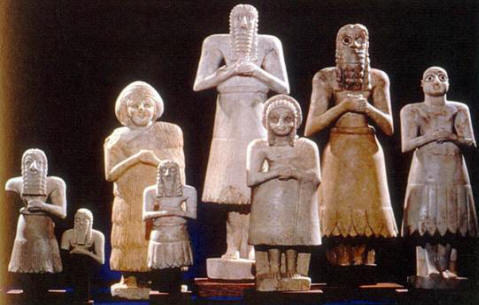
In the ancient Near East, gods like Baal, Chemosh, and Astarte were often represented through statues and other objects. Worshippers believed these deities could influence fertility, war, and prosperity. Scripture also suggests that demonic entities operated behind these idols, responding to sacrifices and rituals, sometimes producing visible effects or manifestations in communities (Deuteronomy 32:17; 1 Corinthians 10:20).

For the Israelites, this presented a recurring challenge. Even kings such as Solomon fell into idolatry, seeking quick blessings through these seemingly active forces. To the human eye, these idols appeared effective, offering dramatic or immediate results — a reality not unlike certain modern occult practices.

Isaiah’s Perspective: Mocking the Idol

Despite the apparent activity of demons behind idols, Isaiah consistently describes idols as:

  • Lifeless: “They have mouths but do not speak, eyes but do not see” (Isaiah 44:18–20).
  • Man-made: “He encourages the goldsmith, the one who smooths with the hammer; one says of the welding, ‘It is good’” (Isaiah 41:7).
  • Incapable of true power: They cannot shape history, forgive sin, or deliver Israel from exile.

Isaiah’s focus is deliberate: he ridicules the physical objects, emphasizing their impotence compared to God. This strategy aims to break the psychological and spiritual grip that idols held over Israel.

Separating the Object From the Spiritual Force

It is essential to understand that mocking the idol does not deny the existence or activity of demonic forces. The Bible maintains a distinction:

  • The idol: a powerless, material object.
  • The demon: a created spiritual being capable of influence within limits permitted by God.

Paul confirms this in the New Testament:
The sacrifices of pagans are offered to demons, not to God” (1 Corinthians 10:20).
Yet he also stresses that idols themselves are nothing (1 Corinthians 8:4).

By targeting the idol, Isaiah seeks to expose the futility of trusting in anything that cannot save. While demons may respond to rituals, the idol’s physical form is powerless — a truth designed to break Israel’s attachment to false gods.

The Theological Message

The core message Isaiah conveys is that God alone controls history and human destiny:

  • Only God can raise empires and direct kings (Isaiah 41:2–4).
  • Only God can protect Israel from exile and bring redemption.
  • Idols and the spiritual forces behind them may appear active, but they are limited and ultimately subordinate to God’s sovereign will.

By emphasizing the lifelessness of idols, Isaiah refocuses Israel’s faith away from objects or mystical shortcuts and toward trust in God’s enduring power.

Lessons for Today

Even in modern times, people may be tempted by practices claiming to bring quick results — through charms, rituals, or occult systems. Isaiah’s approach remains relevant:

  1. Recognize the limits of man-made powers: Objects, rituals, or symbols cannot produce salvation or lasting blessings.
  2. Discern spiritual activity carefully: Just because a spiritual force seems active does not mean it is ultimate or righteous.
  3. Place trust in God alone: Only God controls life, history, and ultimate outcomes.

Isaiah’s repeated dismissal of idols as “mere wood” is a profound spiritual strategy. It does not ignore the activity of demonic forces but rather exposes the illusory power of man-made objects, urging God’s people to focus on the true source of life, protection, and victory. By understanding this distinction, believers can navigate both ancient and modern temptations with discernment and confidence in God’s sovereign power.


Raila Odinga’s Sister Beryl Achieng Dies

Beryl Achieng Odinga, the youngest sister of the late former Prime Minister Raila Odinga, has died at a Nairobi hospital, her family confirmed.

According to family sources, she had been unwell for some time and had been admitted to hospital frequently, including at the same facility where Raila Odinga was treated before his death.

Tributes have poured in from across Kenya, particularly as her death comes just over six weeks after the passing of Raila Odinga on October 15, 2025.

Beryl lived a relatively private life, avoiding the political spotlight despite her family’s prominence. She was, however, a trailblazer: she made history as the first Black town clerk of Mutare, Zimbabwe, and later served as Chairperson of the Nairobi Water and Sewerage Company (NWSC).

She passed away at Nairobi West Hospital and is survived by her three children: Ami Auma, Chizi, and Taurai.

Her body has been moved to Lee Funeral Home, where family and friends have gathered to pay their respects.

Former Mbooni MP and Cabinet Minister Joseph Konzolo Munyao Dies in Nairobi Hospital

Former Mbooni MP and ex-Cabinet Minister Joseph Konzolo Munyao has died while receiving treatment at Nairobi Hospital, his family has confirmed.

His brother, Jacob Mutua Munyao, said he was admitted to the hospital’s Karen branch on Friday with what was described as “nerve complications,” a recurring issue following a medical procedure he had undergone years before.

Munyao served as Minister for Livestock and Fisheries Development under President Mwai Kibaki from 2003 to 2007. He represented Mbooni Constituency for three non-consecutive terms during his political career.

He is survived by four children.

Makueni Governor Mutula Kilonzo Jr. expressed his condolences, noting that Munyao served with “dedication and humility.”

George Natembeya

Governor Natembeya Escapes Attack at Kabuchai Rally as Tensions Spike Ahead of By‑Election

Trans Nzoia Governor George Natembeya narrowly escaped an attack while campaigning in Chwele, Kabuchai Ward, ahead of the November 27 by‑election.

Videos obtained by Kenyans.co.ke show shattered windows on several vehicles — including one in his police escort — amid reports of gunshots that scattered the rally crowd.

Natembeya’s Democratic Action Party of Kenya (DAP‑K) directly blamed the incident on “goons” allegedly linked to National Assembly Speaker Moses Wetang’ula, whose party supports rival candidate Vincent Maunda. DAP‑K called on both the IEBC (electoral body) and the National Police Service to intervene, warning that failing to act could fuel further political unrest.

The governor had earlier publicly accused Wetang’ula of orchestrating the violence locally — underscoring a longstanding political rivalry between them.

Observers say this by‑election is being framed as a proxy battleground for influence, with Natembeya and Wetang’ula representing competing power centres in Western Kenya. The election was triggered by the death of the previous MCA, James Barasa, on August 4, 2025.

🔎 Analysis / Key Implications

  • This is more than a simple campaign skirmish: the scale (shots fired, damaged vehicles) suggests serious political violence.
  • If the allegations against Wetang’ula are true, his influence may be contested not just at the national level, but in local electoral politics.
  • The call for IEBC and police to act is significant; electoral violence could undermine voter confidence.
  • The by‑election is not just about the ward seat — it may be a test of regional political strength for competing factions in Western Kenya.

How the US–Israeli ‘Peace Plan’ Could Fragment Gaza

The October 10 ceasefire has done little to unify Gaza. Instead, it has formalised a new geography of control: a so-called “green zone” under the authority of the Israeli military, and a “red zone” where displaced Palestinians are contained with minimal movement. A barely acknowledged “yellow line” separates the two—an invisible border shaping Gaza’s future.

Washington, under President Donald Trump, has indicated that reconstruction efforts will be restricted to the green zone. This is where Israel and its allies have been drafting plans for what they describe as “alternative safe communities”—zones meant to house Palestinians under heavy supervision.

Despite reports last week suggesting the idea had been abandoned, humanitarian workers report that the first such site is still planned for Rafah in the south, with at least 10 more mapped along the yellow line and stretching northwards.

If implemented, these “safe communities” would crystallise a new and dangerous fragmentation of Gaza. Far from being humanitarian spaces, the camps would function as tightly controlled enclaves: Palestinians would be screened before entering, allowed to access services, but denied any return to the sealed-off “red zone,” which remains blockaded and off-limits.

This approach is not new. Years ago, while coordinating UN humanitarian operations in Palestine, I first heard Israeli officials speak of creating “bubbles”—zones where Palestinians would be vetted and only then granted controlled forms of aid. Today’s proposal for alternative communities is simply that idea in its next, more permanent form.

A Ceasefire Without Peace

This is the grim reality of today’s ceasefire. It does not pave the way for peace; it partitions Gaza into smaller and more manageable segments, eroding any hope for Palestinian sovereignty. In effect, it is not a peace plan—it is a piece plan.

Earlier this week, the UN Security Council approved the proposal by voting to establish a “board of peace” to oversee Gaza and an International Stabilisation Force (ISF) to provide security. But with no negotiated agreement in place, the question remains: what exactly will these forces secure? According to maps of the planned “safe communities,” ISF troops would be deployed along the yellow line, effectively guarding the new encampments.

Unsurprisingly, Hamas rejected the resolution. The terms were clearly imposed rather than negotiated. Under point 17 of the Trump plan—attached to the resolution—if Hamas rejects or delays the proposal, the entire project, including expanded aid operations, moves ahead in the so-called “terror-free areas” transferred from the Israeli army to the ISF. This allows these controlled communities to become the only locations where aid is delivered, further tightening the blockade on the rest of Gaza.

The ceasefire’s evacuation logic—used repeatedly over the past two years to force Palestinians from their homes—is being absorbed into an international plan. Those who remain in the “red zone” risk being branded Hamas supporters, stripped of protection under Israel’s contested interpretation of international law, and exposed to continued military strikes.

Meanwhile, humanitarian groups are being pushed out of the decision-making process. A restrictive Israeli registration system is being used to vet or block organisations, curbing their ability to operate and criticise abuses.

A Familiar Colonial Pattern

History is filled with examples of similar schemes.
The British created fortified “new villages” in Malaya in the 1950s.
The United States rolled out “strategic hamlets” in Vietnam in the 1960s.
Rhodesia built “protected villages” in the 1970s.

In all cases, civilian populations were forcibly moved into guarded camps, screened, and made dependent on aid—an attempt to fracture support for resistance movements fighting colonial rule. All of these projects ultimately failed.

Apartheid South Africa’s bantustans—designed to confine and control Black communities—also collapsed along with the regime that created them.

Yet Gaza now faces a similar imposed framework. Instead of dismantling occupation, the plan entrenches it. By endorsing the proposal, the UNSC has effectively legitimised a system that contradicts International Court of Justice rulings on the occupied Palestinian territory—sanitising a landscape marked by devastation and enabling ongoing impunity.

A Precarious Future

Even under a ceasefire, Palestinians are still being killed for crossing invisible boundaries defined by an occupation that remains illegal under international law. While some governments may celebrate the reduction in open fighting—and quietly resume trade with Israel—the underlying structure of violence remains untouched.

A genuine way forward requires accountability—precisely what the US and Israel have avoided. That means implementing the ICJ’s rulings and allowing unrestricted humanitarian assistance across all of Gaza. Reconstruction must be Palestinian-led, not shaped by military logic or foreign political interests.

The dangerous precedent set in Gaza will not remain confined within its new fenced-off zones. It would further weaken what is left of the international “rules-based order.”

Only one principle offers a path out of this crisis: recognising the inalienable right of Palestinians to determine their own future—a right that has been absent from every step of the current plan.

Dating in Kenya

Money and Expectations: Why Dating in Kenya Now Feels Like a Business Deal

Dating in Kenya is increasingly resembling a negotiation table — a place where emotions meet budgets, expectations meet financial realities, and relationships rise or fall depending on one’s economic muscle. While love has never been entirely free of financial considerations, today’s dating landscape feels more transactional than ever, shaped by rising living costs, shifting gender roles, and the quiet pressures of social media.

The Cost of Modern Romance

A decade ago, dating often meant simple meetups, shared matatu rides, and low-budget hangouts. But as Nairobi’s lifestyle changes and consumer culture intensifies, the cost of romance has escalated sharply.

Young men report that a single date can cost between KSh 3,000 and KSh 12,000, depending on the venue and expectations. For many women, saying yes to a date means calculating safety, time, grooming costs, and whether the man’s effort aligns with her standards.

The result? A subtle but undeniable shift where both parties enter dating with pre-set financial expectations.

Transactional Mindset: Subtle or Open?

Three unspoken assumptions now dominate dating in Kenya:

  1. Men are expected to finance the experience.
    Whether it is transport, meals, gifts, or outings, many women still see financial initiative as proof of seriousness.
  2. Women are expected to present “value.”
    Beauty, emotional support, and lifestyle compatibility are seen as what she brings to the table — often judged harshly through Instagram’s standards.
  3. Outcomes are expected to match investments.
    If he spends, he expects commitment.
    If she invests time and emotional energy, she expects direction, loyalty, and security.

None of this is openly spoken, yet it shapes most conversations and decisions.

Social Media Pressure: A Silent Catalyst

From high-end brunches to Dubai getaways, social feeds have rewritten what “romantic effort” looks like. Couples now measure their relationships against influencers living curated, sponsored lifestyles.

This creates pressure on:

  • Men, who feel the need to perform financially, even beyond their means.
  • Women, who feel the need to maintain appearances that match their peers.

The competition is no longer about compatibility — it’s about lifestyle optics.

Rising Cost of Living = Rising Dating Tension

Kenya’s economic climate is squeezing everyone. Rent, food, transport, and basic bills have climbed significantly in the last five years. When two people meet, they often carry this financial fatigue into the relationship.

For many:

  • Dating becomes an added expense.
  • Romance feels like a luxury.
  • Love becomes a risk — emotionally and financially.

The result is cautious dating, fewer genuine conversations, and more negotiations disguised as courtship.

Gender Roles: Changing, But Not Fully

While more women are working and earning, the cultural scripts around relationships have not evolved at the same pace.

Many men still feel responsible for “providing,” while many women still equate financial ability with leadership and security.

This mismatch creates modern friction:

  • Men feel used or financially stretched.
  • Women feel unsafe or undervalued when men spend too little.

Both walk away believing the other gender has become “unreasonable.”

So Where Does That Leave Love?

Despite these challenges, Kenyan couples still desire genuine relationships — ones built on respect, transparency, and shared responsibility. What many want is not a free relationship, but a fair one.

Real love thrives where:

  • Expectations are clearly communicated
  • Both partners contribute in different but meaningful ways
  • Money enhances — not replaces — emotional connection

The New Face of Dating in Kenya

Dating in Kenya has not lost its soul, but it has undeniably gained a financial edge. What once flowed naturally now feels calculated. Every decision seems to come with a price tag, whether emotional or monetary.

But even in a transactional world, people still long for authenticity. The future of Kenyan relationships may depend on a simple reset:
Choosing honesty over assumptions, value over vanity, and partnership over performance.

New KCB Mobile App

How Kenyans Can Borrow Up to Ksh1 Million Instantly on the New KCB Mobile App

KCB Bank has revamped its mobile app, reinforcing its promise of “For People, For Better” by giving customers direct, simplified access to the bank’s full range of services—including its loan products.

The redesigned New KCB Mobile App consolidates everyday banking into one digital platform. Users can open accounts, send money, pay bills, track expenses, and now, explore and manage loans with just a few taps. Built for speed, security, and convenience, the new interface brings the bank’s entire loan portfolio straight to the customer’s phone.

A key highlight of the upgrade is the ability to apply for digital loans of up to Ksh1 million instantly, ideal for emergencies, business needs, or personal financial goals such as purchasing a vehicle.

KCB offers a variety of loan options—flexible, secured, and unsecured—each designed to meet different customer needs. These include the KCB Flexi Loan, KCB Salary Advance, Secured Loans, and Unsecured Loans like the Masomo Loan.

Below is a full breakdown of what each loan entails, the requirements, and the benefits.

KCB Flexi Loan: Requirements & Benefits

The Flexi Loan is one of the simplest and most flexible digital loan options available. It allows customers to borrow multiple times within their approved limit. For example, a user can borrow Ksh5,000 on Monday, Ksh3,000 on Wednesday, and Ksh2,000 on Saturday, with each request approved instantly—as long as the total does not exceed their loan limit.

Customers can borrow between Ksh1,000 and Ksh1 million, with repayment periods ranging from 1 day to 12 months. Shorter repayment windows—such as 1 to 7 days—attract lower interest rates.

Requirements

  • Operated a KCB account for at least 6 months
  • Have the New KCB Mobile App installed
  • Maintain a good credit score

Benefits

  • Fully digital: no paperwork
  • Instant approval
  • Flexible repayment
  • Interest rates as low as 1.2%

KCB Salary Advance: Requirements & Benefits

For salaried customers facing mid-month financial pressure, KCB’s Salary Advance offers quick, short-term cash support.

Customers can receive up to Ksh500,000, capped at 1.5 times their salary, with repayment spread across six months.

Requirements

  • Must be a salaried KCB account holder
  • Active account for at least 3 months

Benefits

  • Instant disbursement
  • Ideal for urgent cash needs
  • Minimal paperwork

The loan is available directly on the KCB Mobile App, with approval and disbursement taking only minutes.

KCB Unsecured Loans: Types, Requirements & Benefits

Unsecured loans are popular because they do not require collateral. KCB relies on factors such as credit history, income stability, and overall creditworthiness.

KCB’s unsecured options include:

  • Salary Advance
  • Masomo Loan
  • Personal Unsecured Check-Off Loan
  • Personal Unsecured Non-Check-Off Loan

Personal Unsecured Non-Check-Off Loan

This loan offers up to Ksh4 million, repayable over 48 months, with no collateral required. Customers can borrow amounts starting from Ksh20,000.

Requirements

  • Salaried or self-employed
  • Active KCB account for at least 3 months

Benefits

  • No security needed
  • Flexible repayment terms

Personal Unsecured Check-Off Loan

This long-term loan is supported by a guarantee from the borrower’s employer. It is popular among government employees and companies with existing agreements with KCB.

Customers can access up to Ksh10 million, payable over 10 years, with monthly installments deducted directly by their employer.

Requirements

  • National ID or passport
  • KRA PIN
  • Filled application form
  • Last three months’ payslips (original)

Benefits

  • Easy to access
  • Convenient check-off repayments

Masomo Loan

The Masomo Loan supports students pursuing education locally or abroad. It covers tuition and related academic costs.

Customers can borrow between Ksh100,000 and Ksh4 million, depending on credit score, with repayment spread across 24 months.

Requirements

  • Active KCB account for at least 3 months
  • Salaried or supported by a guardian
  • Valid ID or passport
  • Original payslips or proof of income for the self-employed
  • Admission letter from the institution

Benefits

  • Fast processing
  • Repayment tailored for ease during studies

KCB Secured Loans: Types, Requirements & Benefits

Secured loans require collateral such as vehicles, property, or land. KCB offers several secured financing options with competitive terms.

Personal Secured Loan

KCB determines the loan amount based on the value of the customer’s collateral. For example, a car valued at Ksh2.5 million can qualify for up to that amount.

Repayment stretches up to 10 years and is open to both salaried and self-employed customers.

Requirements

  • National ID or passport
  • KRA PIN
  • Filled application form
  • Proof of security ownership

Benefits

  • Competitive rates
  • Long repayment periods

Personal Car Loan

KCB offers 100% or partial financing depending on the vehicle type and intended use.

Examples:

  • School Buses: 100% financing, up to 72 months repayment
  • Toyota Hiace (14-seater matatu): 100% financing, 36 months repayment
  • Personal vehicles (e.g., VW Touareg): Up to 95% financing, 60 months repayment

Requirements

  • Available to both salaried and self-employed customers

Benefits

  • Flexible repayment
  • High-value financing tied to asset valuation

Accessing the Loans

The New KCB Mobile App is available on Google Play and the App Store. Customers can open a new KCB account directly through the app—a process that takes only a few minutes.

With its upgraded loan tools and interface, the app brings KCB’s most comprehensive digital lending experience to date.

Saudi Arabia Announces New Minimum Wage for Kenyan Workers: KSh 110,000 Targeted, But Reality Raises Questions

Riyadh / Nairobi — In a move that has raised both hopes and skepticism, Saudi Arabia has announced that all workers — including Kenyan nationals — will receive a monthly minimum salary of SAR 1,000, which local media report is equivalent to roughly KSh 110,000, starting February 2026.

What the Announcement Says

  • According to a statement from the Kenyan Embassy in Riyadh, the Saudi government’s planned labour reforms include implementing a minimum pay of SAR 1,000/month for all workers.
  • The Embassy is urging Kenyan workers in Saudi Arabia to verify with their employers that the new salary structure will be applied, and to report any non-compliance via the Embassy’s official channels.
  • The reforms are being made in the context of broader labour changes in Saudi Arabia, including some revisions to the kafala system — a long-criticized sponsorship framework for migrant labour.

But the Numbers Don’t Fully Add Up

While some media are quoting KSh 110,000 as the local equivalent, the conversion is misleading. According to the Kenyan Embassy’s own communication, the wage of “SAR 1,000” translates to approximately KSh 34,455.

  • This discrepancy suggests that some outlets may be misreporting or misinterpreting the exchange rate.
  • The more conservative figure (KSh 34,455) is significantly lower than the “KSh 110,000” headline, casting doubt on whether this salary will dramatically improve the earnings of many Kenyan workers.

Why This Matters

  1. Worker Protection: The Embassy has made clear it will monitor implementation closely. For many Kenyan workers in Saudi Arabia, this could be a welcome protection against very low or irregular pay.
  2. Historical Concerns: Reports and investigations have previously revealed how some Kenyan workers, especially domestic workers, face exploitation in Saudi Arabia.
  3. Recruitment Risks: There is also concern that recruitment agencies might take advantage of eager job-seekers by promising inflated salaries. Without clear enforcement, the new minimum may not mean much in practice.

Reactions from Kenya

  • The Kenyan government, through its diplomatic channels, seems cautiously optimistic, emphasizing worker welfare and urging nationals to use the Embassy’s support systems.
  • Critics and labour rights advocates, however, are warning that past abuses — including withheld pay, passport confiscation, and poor working conditions — may continue unless stronger safeguards are enforced.
  • There is also a broader debate in Kenya on how much the government does to shield its citizens working abroad from exploitative arrangements.

Behind the Reform: Broader Labour Changes

  • The wage reform is part of a wider package of labour changes in Saudi Arabia. Some of these changes relate to the kafala system, historically criticized for limiting workers’ freedom and placing their legal status in the hands of their employers.
  • Saudi Arabia’s Ministry of Human Resources has in recent years revised recruitment costs and labour protections, particularly for migrant workers.
  • However, rights groups argue that certain categories — especially domestic workers — remain excluded from full protections.

What Kenyan Workers Should Do

  • Confirm with your employer whether the new minimum wage policy will apply to you after February 2026.
  • Keep documented proof of what you’re paid, and if possible, save copies of your contract and salary slips.
  • Use the Kenyan Embassy in Riyadh as a resource: report any delay or refusal to pay, or any violation of labour laws.
  • Stay informed: changes are still being rolled out, and implementation may vary depending on employer, region, or sector.
Newsly KE
Privacy Overview

This website uses cookies so that we can provide you with the best user experience possible. Cookie information is stored in your browser and performs functions such as recognising you when you return to our website and helping our team to understand which sections of the website you find most interesting and useful. View our privacy policy and terms & conditions here.

×