Is a Regional War Brewing in the Larger East African Region?

Post

Is a Regional War Brewing in the Larger East African Region?

East Africa’s security landscape is becoming increasingly fraught. The long‑running conflict in eastern Democratic Republic of Congo (DRC)—particularly the resurgence of the M23 rebel group—has escalated sharply, raising concerns about broader regional instability. In late 2025, M23, widely accused of being backed by Rwanda, seized strategic territory including the border city of Uvira, displacing hundreds of thousands and alarming neighbouring states.

The Central Flashpoint: Eastern DRC

Since 2022, M23 has been one of the strongest armed actors in eastern DRC, capturing key cities such as Goma and Bukavu with alleged Rwandan military support. These advances have exacerbated humanitarian suffering and revived fears of a spillover into the wider Great Lakes region. Burundi has publicly warned that continued fighting risks pulling it and other neighbours into conflict. Is a Regional War Brewing in the Larger East African Region?

East Africa’s security landscape is becoming increasingly fraught. The long‑running conflict in eastern Democratic Republic of Congo (DRC)—particularly the resurgence of the M23 rebel group—has escalated sharply, raising concerns about broader regional instability. In late 2025, M23, widely accused of being backed by Rwanda, seized strategic territory including the border city of Uvira, displacing hundreds of thousands and alarming neighbouring states.

The Central Flashpoint: Eastern DRC

Since 2022, M23 has been one of the strongest armed actors in eastern DRC, capturing key cities such as Goma and Bukavu with alleged Rwandan military support. These advances have exacerbated humanitarian suffering and revived fears of a spillover into the wider Great Lakes region. Burundi has publicly warned that continued fighting risks pulling it and other neighbours into conflict.

Although the United States and the European Union helped broker peace agreements between DRC and Rwanda in 2025, these accords have largely fallen apart amid ongoing clashes and mutual accusations of violations.

U.S. Involvement and the Proxy War Narrative

Some analysts and commentators speculate about U.S. intentions in the region, including theories about proxy conflict dynamics. In reality, while Washington has increasingly criticised Rwanda for allegedly fueling unrest at the United Nations, its approach appears rooted in diplomatic pressure and sanctions threats rather than open military confrontation.

There’s no clear evidence that the U.S. is actively arming Burundi as part of a proxy strategy. Instead, U.S. policy has urged restraint and compliance with peace accords. The U.S. has strategic interests in stabilising the Great Lakes region—both humanitarian and geopolitical—but direct military intervention is unlikely absent a dramatic shift in interests or threats to U.S. personnel.

Regional Relationships: Rwanda and Its Neighbours

Claims of Rwanda attacking countries like Uganda or Tanzania are far‑fetched given historical ties, particularly between Rwanda and Uganda. Their leaderships have a long history of cooperation, even if relations have occasionally been tense—making large‑scale conflict between them less probable.

Rwanda’s primary security focus seems anchored on managing what it perceives as threats emanating from eastern DRC. Kigali contends that armed groups like those linked to the 1994 genocide continue operating in eastern Congo, justifying its involvement there.

Kagame’s Strategic Options

President Paul Kagame faces a complex set of choices:

  1. Diplomacy and De‑escalation: Honour peace agreements and negotiate with Kinshasa and international mediators. This reduces the risk of sanctions and isolates the conflict from the region at large.
  2. Containment in Eastern DRC: Maintain a defensive posture focusing solely on threats directly tied to Rwanda’s security narrative, avoiding actions perceived as expansionist.
  3. Escalation Risk: Continued support (direct or indirect) for rebels like M23 might secure tactical gains in eastern DRC but also fuels international criticism and risks retaliation, economic sanctions, or isolation.
  4. Regional Cooperation: Rwanda could work more closely with the East African Community and African Union to build confidence and mitigate fears among neighbours.

Beyond Borders: Broader Regional Dynamics

The conflict in eastern DRC has already drawn in neighbouring states through troop deployments and peacekeeping efforts (e.g., the EAC Regional Force), illustrating how local violence can entangle multiple capitals.

Moreover, economic interdependence—such as Kenya’s role as a trade gateway for landlocked neighbours—means that instability in one state quickly affects others. While this dynamic raises the stakes, it also incentivises cooperation to prevent full‑scale war.

Yes, the risk of broader regional conflict in East Africa has grown due to the complex crisis in eastern DRC. But rather than a straightforward march toward war engulfing the entire region, what’s unfolding is a multi‑layered geopolitical struggle shaped by rebel dynamics, state interests, international diplomacy, and economic interdependence. The U.S. is more likely to remain a diplomatic actor than a combatant, and Rwanda’s leadership must balance security concerns with international norms if it wants to avoid deeper isolation or extended conflict.

Although the United States and the European Union helped broker peace agreements between DRC and Rwanda in 2025, these accords have largely fallen apart amid ongoing clashes and mutual accusations of violations.

U.S. Involvement and the Proxy War Narrative

Some analysts and commentators speculate about U.S. intentions in the region, including theories about proxy conflict dynamics. In reality, while Washington has increasingly criticised Rwanda for allegedly fueling unrest at the United Nations, its approach appears rooted in diplomatic pressure and sanctions threats rather than open military confrontation.

There’s no clear evidence that the U.S. is actively arming Burundi as part of a proxy strategy. Instead, U.S. policy has urged restraint and compliance with peace accords. The U.S. has strategic interests in stabilising the Great Lakes region—both humanitarian and geopolitical—but direct military intervention is unlikely absent a dramatic shift in interests or threats to U.S. personnel.

Regional Relationships: Rwanda and Its Neighbours

Claims of Rwanda attacking countries like Uganda or Tanzania are far‑fetched given historical ties, particularly between Rwanda and Uganda. Their leaderships have a long history of cooperation, even if relations have occasionally been tense—making large‑scale conflict between them less probable.

Rwanda’s primary security focus seems anchored on managing what it perceives as threats emanating from eastern DRC. Kigali contends that armed groups like those linked to the 1994 genocide continue operating in eastern Congo, justifying its involvement there.

Kagame’s Strategic Options

President Paul Kagame faces a complex set of choices:

  1. Diplomacy and De‑escalation: Honour peace agreements and negotiate with Kinshasa and international mediators. This reduces the risk of sanctions and isolates the conflict from the region at large.
  2. Containment in Eastern DRC: Maintain a defensive posture focusing solely on threats directly tied to Rwanda’s security narrative, avoiding actions perceived as expansionist.
  3. Escalation Risk: Continued support (direct or indirect) for rebels like M23 might secure tactical gains in eastern DRC but also fuels international criticism and risks retaliation, economic sanctions, or isolation.
  4. Regional Cooperation: Rwanda could work more closely with the East African Community and African Union to build confidence and mitigate fears among neighbours. ACCORD

Beyond Borders: Broader Regional Dynamics

The conflict in eastern DRC has already drawn in neighbouring states through troop deployments and peacekeeping efforts (e.g., the EAC Regional Force), illustrating how local violence can entangle multiple capitals.

Moreover, economic interdependence—such as Kenya’s role as a trade gateway for landlocked neighbours—means that instability in one state quickly affects others. While this dynamic raises the stakes, it also incentivises cooperation to prevent full‑scale war

Yes, the risk of broader regional conflict in East Africa has grown due to the complex crisis in eastern DRC. But rather than a straightforward march toward war engulfing the entire region, what’s unfolding is a multi‑layered geopolitical struggle shaped by rebel dynamics, state interests, international diplomacy, and economic interdependence. The U.S. is more likely to remain a diplomatic actor than a combatant, and Rwanda’s leadership must balance security concerns with international norms if it wants to avoid deeper isolation or extended conflic
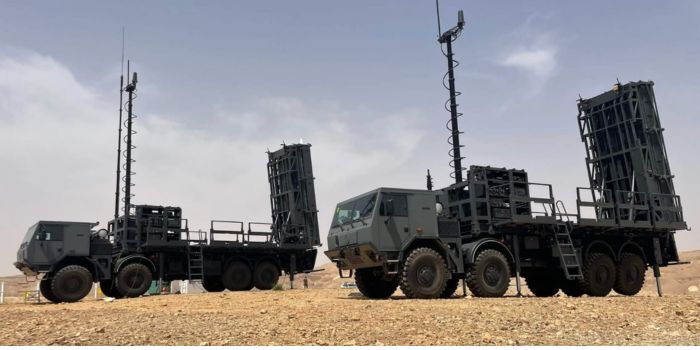

Kenya Receives Israeli-Made SPYDER Air Defense System

Kenya has taken delivery of an advanced SPYDER (Surface-to-air PYthon and DERby) air defence system from Israel, significantly strengthening the Kenya Defence Forces’ ability to counter aerial threats.

The system, manufactured by Rafael Advanced Defense Systems, was delivered in December 2025 as part of Kenya’s ongoing military modernisation programme. It is designed to intercept aircraft, helicopters, drones, and guided missiles across a range of operational environments.

Financing and Procurement

The acquisition was financed through a bilateral loan arrangement backed by the Israeli government, valued at approximately KSh3.4 billion (about USD 26 million). The loan was negotiated during high-level engagements between Nairobi and Jerusalem in mid-2025 and forms part of Kenya’s broader defence development budget.

Capabilities and Technology

SPYDER is an all-weather, quick-reaction surface-to-air missile system capable of operating while mobile. It can detect, track, and engage multiple targets simultaneously, with engagement ranges extending up to 100 kilometres, depending on the configuration.

A key strength of the system is its counter-drone capability, enabling it to neutralise uncrewed aerial vehicles (UAVs), an increasingly common threat in modern conflict zones. The launcher provides 360-degree coverage and can fire within seconds of threat detection. It supports both lock-on before launch (LOBL) and lock-on after launch (LOAL) engagement modes.

The system integrates advanced radar solutions from Israel Aerospace Industries (IAI) Elta, including the EL/M-2106 ATAR for short-range operations and the EL/M-2084 Multi-Mission Radar (MMR) for medium-range coverage.

SPYDER employs Python-5 infrared-guided missiles and Derby active radar-guided missiles, which are also used in air-to-air combat roles. Multiple variants — including SR, MR, LR, ER, and all-in-one configurations — allow the system to operate at varying ranges and altitudes.

Strategic Significance

Defence analysts view the acquisition as a strategic response to evolving regional security challenges, particularly the persistent threat posed by Al-Shabaab and the increasing use of drones in asymmetric warfare.

The deal further deepens Kenya-Israel security cooperation, which spans intelligence sharing, counter-terrorism efforts, and defence technology partnerships.

Regional and Global Context

The SPYDER air defence system is already in service in several countries, including India, Singapore, Morocco, and the Czech Republic, with the Czech Republic being the first NATO member to deploy it.

With this acquisition, Kenya joins Ethiopia and Morocco as the only African countries operating the Israeli-made SPYDER system, positioning itself among a growing group of nations investing in advanced air defence capabilities.

The system is expected to provide a critical layer of protection for Kenyan airspace and key national infrastructure as the country continues to modernise its defence posture.

Cyrus Jirongo: A Comprehensive Life History of the Kenyan Political Powerbroker (1961–2025)

Cyrus Shakhalaga Khwa Jirongo was one of Kenya’s most controversial and influential political figures of the last three decades — a leader, MP, minister, businessman, and kingmaker whose rise, fall, and legacy shaped the political landscape of Western Kenya and the nation at large.

Early Life and Education

  • Born: 21 March 1961 in the former Kenya Colony (modern Kenya).
  • Education: Attended Mang’u High School from 1978 to 1981, one of Kenya’s most prestigious secondary institutions.

Despite limited formal professional training, Jirongo developed early interests in leadership and organisation — skills that later fuelled his political ascent.

Rise to National Prominence: Youth for KANU ’92

Cyrus Jirongo first rose to national prominence in 1992 as the leader of Youth for KANU ’92 (YK’92) — a powerful youth lobby group formed to support then–President Daniel arap Moi and the Kenya African National Union (KANU) in the country’s first multiparty elections after the end of single–party rule.

Under Jirongo’s leadership, YK’92 became known for its mass mobilisation, fundraising prowess, and campaign activities, helping Moi retain power. This formidable early influence made Jirongo one of the most influential young political organisers in Kenya in the early 1990s.

Business and Football Administration

Beyond politics, Jirongo also made a name for himself in sports administration:

  • In 1991, he became Chairman of AFC Leopards Football Club, one of Kenya’s most popular and successful football teams, which significantly broadened his public profile beyond partisan politics.

He also ventured into business, particularly in real estate and commercial enterprises, and at one point was popularly described as having become a billionaire at a young age, though many of these ventures later experienced financial distress.

Parliamentary Career

Lugari MP (First Term: 1997–2002)

Jirongo successfully contested and won the Lugari Constituency parliamentary seat in the 1997 general elections, marking his formal entry into elective politics.

Minister for Rural Development (2002)

Under the Daniel arap Moi presidency, he briefly served as Minister for Rural Development in 2002, a post he held until the end of the Moi administration later that year.

Return to Parliament (2007–2013)

After a period out of elective office, Jirongo reclaimed the Lugari MP seat in 2007, this time under his own political umbrella, the Kenya African Democratic Development Union (KADDU) — becoming the only MP elected on that ticket in that cycle.

During his second term, he played a visible role in national debates and retained a strong base among his constituents in Lugari, Western Kenya.

Presidential and County Politics

Jirongo’s ambitions extended beyond Parliament:

  • In 2013, he initially expressed interest in the presidency but later shifted focus to the Kakamega Senate seat, which he lost.
  • In 2017, he stood for President of Kenya under the United Democratic Party (UDP), receiving a small fraction of the total vote — an indication of the challenge in translating his organisational skills into broad national support.
  • In 2022, he again sought elective office as Kakamega Governor, this time losing to his opponent, Fernandes Barasa.

Even in defeat, Jirongo remained an active figure within the Azimio la Umoja coalition that contested the 2022 election, later congratulating President William Ruto on his victory, demonstrating a pragmatic willingness to bridge political divides.

Financial Controversies and Legal Battles

Jirongo’s life was also marked by financial turmoil and high-profile legal disputes:

  • In 2017, a Kenyan High Court declared him bankrupt after he failed to repay loans amounting to about KSh700 million, a ruling that had widespread implications for his capacity to hold public office.
  • Over the years, properties tied to his businesses were subjected to receivership or public auction due to debts owed to commercial lenders.
  • Independent investigations have reported his association with extensive borrowing from institutions like Postbank Credit Ltd, contributing to massive unpaid debts running into the billions of Kenyan shillings, though details remain tied up in ongoing debate and court records.
  • In late 2025, a Sh50 million fraud case against Jirongo was ordered terminated by a Nairobi court on procedural grounds.

These financial controversies earned him both notoriety and the popular media label of a “broke billionaire” — someone who once claimed great wealth but later grappled with severe financial difficulties.

Personal Life

Jirongo was known for his polygamous family life, publicly acknowledging having multiple wives from different Kenyan communities — a reflection of his deep social roots and cultural ties across ethnic lines.

He also faced personal tragedy in 2025 when one of his children passed away, events that drew national sympathy.

Death: Road Accident in Naivasha (2025)

On Saturday, 13 December 2025, Cyrus Jirongo died in a head-on road collision on the Nairobi–Nakuru Highway near Karai, Naivasha, Nakuru County.

  • The 64-year-old was driving alone to his home in Lugari, Kakamega County, when his Mercedes Benz collided with a Climax Coach bus at about 3:00 a.m. police said.
  • Emergency responders pronounced him dead at the scene, and his body was taken to a local mortuary pending transfer to Nairobi.
  • Tributes and condolences poured in from across Kenya’s political spectrum — from President William Ruto, who remembered Jirongo as a “fighter in every sense,” to leaders such as Francis Atwoli, Moses Wetang’ula, and Gideon Moi, all highlighting his impact on Kenyan politics and community life.

Legacy

Cyrus Jirongo’s life embodied Kenya’s turbulent multiparty evolution: from a youthful kingmaker in the early 1990s to a seasoned politician whose career oscillated between power and controversy. He combined grassroots mobilization, political ambition, and business enterprise in a manner that left a deep imprint on Western Kenyan politics and beyond — even as debates continue about his financial legacy and methods.

Former Lugari MP Cyrus Jirongo Dies in Road Crash

Veteran Kenyan politician and former Lugari Member of Parliament Cyrus Shakhalaga Jirongo has died in a tragic road accident along the Nairobi–Nakuru Highway early on Saturday morning.

According to Rift Valley Traffic Enforcement officer Sarah Chumo, the 64-year-old lawmaker was involved in a head-on collision with a Climax Coach bus near Karai, Naivasha, Nakuru County, at approximately 3:00 am. He died at the scene of the crash.

Friends and relatives said Jirongo was driving himself to his rural home in Lugari, Kakamega County, after meeting with a group of Western Kenya leaders in Karen, Nairobi late Friday night. He was alone in the vehicle at the time of the accident.

Police said preliminary investigations indicate that Jirongo’s vehicle veered out of its lane into the path of the oncoming bus, resulting in the fatal collision. Both vehicles were severely damaged, and emergency responders pronounced him dead before he could be evacuated.

His body was moved to a local mortuary in Naivasha, with arrangements underway to transfer it to Nairobi as family and close associates gathered at the scene.

Tributes Pour In

News of Jirongo’s death prompted an outpouring of tributes from political leaders and colleagues across Kenya. Central Organisation of Trade Unions (COTU) Secretary-General Francis Atwoli mourned him as “an asset to our community and to Kenya”, adding: “We loved him, but God loved him more.”

Bungoma Governor Kenneth Lusaka described his passing as the loss of “one of our greatest sons.” Other leaders, including National Assembly Speaker Moses Wetang’ula and Busia Senator Okiya Omtatah, highlighted Jirongo’s impact on the political landscape, particularly his role as a youth mobilizer in the early 1990s.

A Storied Political Career

Born on 21 March 1961, Jirongo first rose to national prominence as the leader of Youth for KANU ’92 (YK’92) — a powerful political lobby group that mobilized support for the late President Daniel arap Moi during Kenya’s first multiparty elections.

He was first elected Member of Parliament for Lugari Constituency in 1997 and later served as Minister for Rural Development under President Moi. Jirongo returned to Parliament in 2007 and continued to be a visible political figure.

In subsequent years, Jirongo made several bids for elective office, including an unsuccessful run for Kakamega Governor in 2022, and was involved in various political movements and business ventures.

The Tardigrade: Nature’s Tiny, Indestructible Superhero

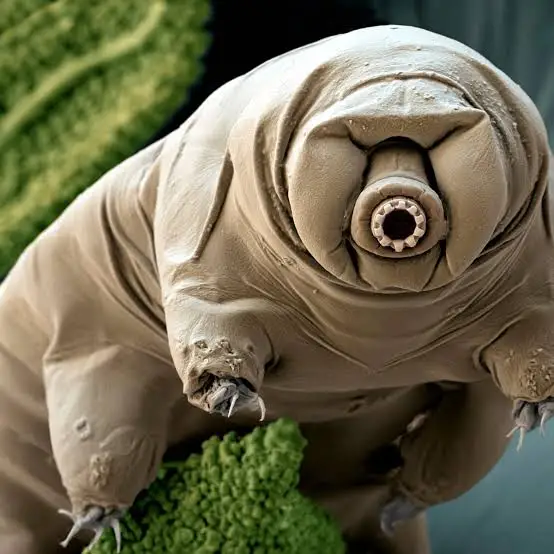
If you think superheroes, aliens, or sci-fi creatures are impressive, wait until you meet the tardigrade.

This tiny, chubby, eight-legged creature is so tough that it can survive conditions that would instantly kill almost any other living being on Earth. Some scientists even believe tardigrades could survive the end of the world. Yes — it’s that resilient.

Let’s dive into the world of this microscopic legend.

Meet the Tardigrade — The Ultimate Survivor

At smaller than a grain of salt, the tardigrade may look harmless. But don’t let its size fool you — it’s one of nature’s most extreme survival machines.

Here’s what it can withstand:

  • 🔥 Boiling heat
  • ❄️ Freezing cold (almost down to absolute zero)
  • 🧊 Decades of being frozen
  • 💥 Crushing pressure stronger than the deepest ocean trench
  • ☢️ Radiation thousands of times stronger than what humans can endure
  • 💧 Total dehydration
  • 🧪 Lethal chemicals
  • 🪐 The vacuum of outer space
  • ⛏️ Extreme underground conditions

It’s basically a microscopic, indestructible tank.

How Does It Survive the Impossible?

When faced with extreme conditions, tardigrades don’t just endure — they transform.

They curl up into a dried, lifeless-looking ball called a tun. In this state:

  • Metabolism drops to nearly zero
  • Water evaporates from their body
  • They become a biological time capsule

In the tun state, tardigrades can survive:

  • 30 years without water
  • Temperatures hotter than boiling oil
  • Temperatures colder than Antarctica
  • The vacuum of space
  • Radiation from nuclear-level exposure

Scientists have boiled, frozen, irradiated, and even launched them into space… and they still survive.

The Secret Superpower: Dsup Protein

Tardigrades produce a unique protein called Dsup (Damage Suppressor).

This protein acts like an invisible shield, protecting their DNA from:

  • Radiation
  • Chemicals
  • Extreme environmental stress

Researchers are studying Dsup to explore potential applications for humans:

  • Cancer treatments
  • Radiation protection for astronauts
  • Organ preservation for transplants
  • Extending human lifespan

Imagine having a microscopic shield around your DNA — that’s the tardigrade’s superpower.

Everywhere… and Nowhere

Tardigrades are found in almost every environment with a little moisture:

  • Moss
  • Oceans
  • Forests
  • Deserts
  • Mountains
  • Antarctica

You’ve probably walked past millions of them without noticing. Tiny, hidden, and almost impossible to kill — they are truly masters of survival.

Why Tardigrades Are Nature’s Greatest Survivors

The toughest creature on Earth isn’t a lion, elephant, shark, or crocodile. It’s a microscopic water bear that:

  • Survives extreme heat and cold
  • Endures radiation and chemical exposure
  • Survives decades without water
  • Can even live in space

Next time you hear the word tardigrade, remember: you’re hearing about one of nature’s ultimate survival champions.

Nature proves it time and again: size doesn’t define strength — biology does.

The Incredible Octopus: The Ocean’s Smartest and Most Mysterious Creature

If you think humans are fascinating, wait until you meet the octopus — a creature so intelligent, so unusual, and so mysterious that many scientists jokingly call it “an alien of the sea.” From its extraordinary mind to its unmatched survival skills, the octopus truly stands out in the animal kingdom.

Three Hearts With One Mission: Survival

One of the most surprising facts about octopuses is that they have three hearts, and each serves a special purpose.

1. The Systemic Heart

This is the main heart.
Its job is to pump blood throughout the entire body, keeping the octopus alive and active.

2 & 3. The Branchial Hearts

These two smaller hearts sit right next to the gills.
They pump blood through the gills, helping the octopus take in oxygen while underwater.

In simple terms:
One heart keeps the body going. The other two help it breathe.
A perfectly designed circulation system for an underwater life.

Nine Brains: A Genius in Every Arm

Here’s where things get truly mind-blowing.

An octopus has nine brains — one central brain in its head and eight mini-brains, one in each arm.

The Main Brain

This is the command center, responsible for big decisions, problem-solving, and complex thinking.

The Arm Brains

Each arm can:

  • Move independently
  • Taste and feel the environment
  • Grab and investigate objects
  • Respond to danger
  • Explore or hunt without waiting for instructions

This is why an octopus can multitask like no other creature on Earth.
One arm may open a shell, another may search for food, another checks for predators — all at the same time.

Scientists say these abilities make octopuses among the smartest animals in the ocean, able to:

  • Solve puzzles
  • Escape enclosures
  • Remember patterns
  • Open jars
  • Use tools

Some arms can even keep moving briefly after being separated, thanks to their built-in mini-brains — a creepy but incredible example of their powerful nervous system.

A Body Built for Disguise, Escape, and Exploration

Beyond the brains and hearts, the octopus’s physical abilities are equally astonishing.

Camouflage Experts

In seconds, an octopus can change:

  • Color
  • Shape
  • Texture

This allows it to blend with rocks, sand, coral, or seaweed — becoming almost invisible to predators and prey.

Flexible and Boneless

Since it has no bones, an octopus can squeeze through impossibly tiny cracks and hide in narrow spaces where larger predators can’t reach.

Ink Defense

When threatened, an octopus can shoot a cloud of ink to create confusion and make a quick escape.

Every part of its body is designed for:

  • Stealth
  • Survival
  • Exploration

One of Nature’s Most Extraordinary Creations

With 9 brains, 3 hearts, and a soft, shape-shifting body, the octopus is truly one of the most exceptional animals on Earth. It thinks in nine places at once, breathes with three hearts, and lives a life full of intelligence and mystery.

Next time you see an octopus, remember:
You’re looking at one of nature’s most brilliant and misunderstood creatures — a living masterpiece of evolution.

Nature is amazing.

Why HIV infections among youths are rising in Kenya — a factual look

HIV remains a leading public-health challenge in Kenya, and young people (roughly ages 15–24) are taking up an increasing share of new infections. This article summarizes the latest national and international data, outlines the main drivers behind the rise among youth, and lists policy- and program-level actions that evidence suggests would help reverse the trend.

What the numbers say (most recent estimates)

  • Kenya’s HIV estimates portal reports about 1,326,419 people living with HIV in the country (latest national estimates).
  • A large share of new adult infections in Kenya are occurring in adolescents and young people: about 38% of all new adult HIV infections are among those aged 15–24.
  • National modelling and recent analyses estimate the number of young adults (15–24 years) living with HIV in Kenya at roughly 160–165 thousand people (modelled estimates in recent Kenya HIV reports).
  • The shift in burden is part of a wider regional and global pattern: in 2024 an estimated 370,000 young people aged 15–24 were newly infected with HIV worldwide, with sub-Saharan Africa carrying the largest share.
  • Globally, UNAIDS continues to highlight that adolescent girls and young women are disproportionately affected — a fact that is reflected in Kenya’s data and in program priorities.

(Those five sources above are the main factual anchors used in the analysis below.)

Why infections among youths are rising — the main drivers

1. Unequal vulnerability — especially for adolescent girls and young women

Adolescent girls and young women face biological, socio-economic and cultural risks that increase their chance of HIV infection (age-disparate sex, transactional sex, lower negotiating power for condom use). National surveys and UNAIDS analyses show girls in this age group account for a disproportionate share of new infections.

2. Gaps in access to sexual and reproductive health (SRH) services

Many young people — particularly unmarried adolescents — still face barriers to confidential, youth-friendly HIV testing, PrEP (pre-exposure prophylaxis), condoms and sexual health education. Where services are not youth-friendly or are stigmatizing, uptake falls and prevention gaps remain. Kenya’s prevention frameworks and programme reviews point to these service gaps as critical bottlenecks.

3. Social and economic drivers (poverty, schooling, migration)

Poverty and limited schooling raise the likelihood of transactional sex or early sexual debut. Urban migration and informal work can expose youth to networks with higher HIV prevalence. These structural drivers are repeatedly identified in Kenya’s HIV situation analyses.

4. Gender-based violence (GBV) and coercion

GBV increases both the biological and behavioural risk of HIV acquisition. Young women who have experienced violence are less able to negotiate condom use and more likely to have older sexual partners — a pattern linked to higher HIV risk in national studies.

5. Service disruptions and funding pressures

Interruptions to prevention and testing services — whether caused by health system shocks (e.g., COVID-19 era disruptions) or reductions in donor support — reduce routine testing, community outreach and PrEP delivery. Recent national reporting and international commentary have flagged concerns about funding and program continuity as threats to progress.

6. Low use of combination prevention among youth

While biomedical tools exist (condoms, voluntary medical male circumcision, PrEP, treatment as prevention), uptake among adolescents and young adults is uneven. Low risk perception, stigma about accessing services, and limited targeted outreach mean many young people do not use the full mix of prevention options.

7. Information gaps, misinformation and social norms

Digital misinformation, limited comprehensive sexuality education in some settings, and cultural taboos about discussing sex with adolescents can leave young people uninformed about how to protect themselves. Programs that combine accurate SRH education with service linkages have been shown to improve prevention behavior.

What works — evidence-based actions to turn the tide

Program and policy responses that programs and international agencies recommend for Kenya include:

  1. Scale up youth-friendly testing and prevention (bring HIV testing, PrEP and condoms to schools, youth centers and community outlets; make services confidential and non-judgmental).
  2. Prioritise adolescent girls and young women with combination packages — economic empowerment, GBV prevention, SRH services and PrEP where indicated.
  3. Strengthen social-behavioural interventions — comprehensive sexuality education adapted for local contexts, digital outreach, and peer-led mobilisation.
  4. Protect and stabilise funding for prevention so community outreach, testing and PrEP programs are continuous and can reach remote and high-risk youth populations.
  5. Improve data and local targeting — use county-level estimates and hotspot mapping to target interventions where new infections among youth are rising fastest.

Kenya has made strong gains in HIV control overall, but recent national and global data show young people — especially adolescent girls and young women — are shouldering a growing share of new infections. The rise among youth is driven by a mix of biological vulnerability, social and economic inequality, service gaps, and program/funding pressures. Reversing the trend requires scaling youth-friendly, combination prevention and stabilising the delivery platforms that reach adolescents where they live, learn and work.

Digital parenting: How to Raise Children in a Screen-Saturated World

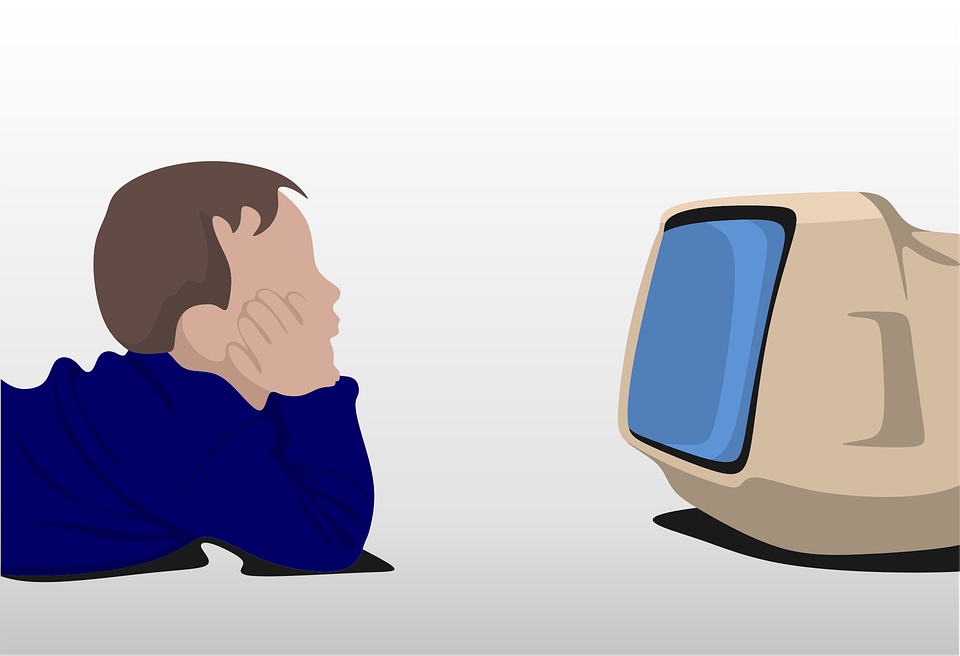
In today’s homes, the glow of screens has become the new household fire. Children gather around phones, tablets and televisions the way past generations gathered around evening fires for stories. But unlike those fireside moments, today’s digital light comes with risks that most parents are only beginning to understand. As technology infiltrates schoolwork, entertainment, friendships and even spirituality, the question facing modern families is urgent: how do parents raise grounded children in a world where everything happens on a screen?

The new childhood reality

Ten years ago, a child using a smartphone was a novelty. Today it is normal—even expected. Kenyan teenagers spend an average of 5 to 7 hours a day online according to local digital-use surveys. Much of that time goes into TikTok, YouTube Shorts, gaming, and WhatsApp groups. Younger children are not far behind, with many introduced to screens before the age of three.

Screens are no longer just toys; they are teachers, entertainers, babysitters, companions and—in extreme cases—addictions.
Parents cannot ignore this reality. They cannot wish it away. The challenge is learning to guide, not fight, the digital tide.

Why parents struggle

The modern parent is the first generation trying to raise children in a world dominated by technology they themselves did not grow up with. This creates several unique pressures:

  • Digital illiteracy: Many parents don’t know the apps their children use, how they work or what hidden dangers exist.
  • Time poverty: Long working hours and commuting mean screens easily become babysitters.
  • Peer pressure: “All my friends have a phone” is a common argument that parents find hard to counter.
  • Mixed messages: Teachers, churches and experts offer conflicting advice about screen time, leaving parents unsure what is safe.

The result is reactive parenting—responding to problems when they arise, instead of guiding behaviour from the start.

The hidden risks of unlimited screens

While screens have educational and social benefits, unchecked use comes with consequences that researchers warn are becoming harder to reverse.

  1. Shortened attention span: Fast-paced content rewires children’s brains to crave constant stimulation, making schoolwork feel slow and boring.
  2. Poor emotional regulation: Children exposed to constant noise and excitement struggle to handle boredom, frustration or silence.
  3. Sleep disruption: Blue light from devices affects brain chemistry and reduces rest quality, especially when screens are used before bed.
  4. Exposure to toxic content: Pornography, violence, cyberbullying, predators and dark online communities are only a few clicks away.
  5. Social withdrawal: Children may retreat into digital worlds instead of building real-world friendships.
  6. Distorted self-image: Social media promotes comparison, insecurity and pressure to perform for likes.

These risks do not only affect teenagers—they increasingly appear in children as young as six.

Why banning screens doesn’t work

Some parents respond with strict rules like “no phone until 18,” or total bans on social media. While the intention is good, the method rarely succeeds.
Banning screens in a world built on screens leaves children unprepared for the digital realities of education, communication and future employment.

Instead of banning, experts recommend “digital discipling”—teaching children how to use screens with wisdom, restraint and values.

The core principles of effective digital parenting

1. Be present—your relationship comes before rules

A child who feels emotionally connected is more likely to listen, obey and share their online struggles. Digital guidance works best when the parent-child relationship is strong.

2. Set age-appropriate boundaries

  • Ages 0–3: Avoid screens except for supervised video calls with relatives.
  • Ages 4–9: Introduce short sessions (20–30 minutes) with educational content.
  • Ages 10–13: Gradual introduction to the internet with strict monitoring.
  • Ages 14–17: Teach digital responsibility rather than enforce total control.

3. Prioritise content, not just time

Two hours of educational content is better than 30 minutes of toxic entertainment.
Parents should know what their children watch—not just how long.

4. Create “screen-free zones” at home

These could include:

  • mealtimes,
  • bedrooms,
  • prayer time,
  • homework hours, and
  • family gatherings.

This restores the human connection screens often erode.

5. Model healthy digital behaviour

Children imitate what they see, not what they are told.
A parent addicted to their phone cannot teach discipline.

6. Talk openly about online dangers

Discuss predators, fake friends, harmful trends, and the consequences of oversharing.
Information is protection.

7. Use technology to manage technology

Modern parental-control tools like Google Family Link, Apple Screen Time, and YouTube Kids help filter content, set limits and monitor behaviour.

Digital parenting for Kenyan realities

Kenyan parents face unique challenges:

  • Schools now depend heavily on digital assignments.
  • Some homes have only one smartphone, shared by siblings.
  • Internet bundles are expensive, encouraging late-night WiFi use in public places.
  • Content moderation in Africa is weak, exposing children to harmful material quickly.

Yet Kenyan families also have unique strengths—strong extended families, church communities, and traditional values that emphasise respect, discipline and character.
These can be powerful allies in responsible digital upbringing.

Building a digitally healthy home culture

To protect children, families must intentionally cultivate a home environment that balances modern technology with timeless values.

This involves:

  • Reintroducing storytelling so children don’t rely solely on screens for entertainment.
  • Encouraging outdoor play to counter sedentary lifestyles.
  • Teaching critical thinking so children can distinguish truth from online manipulation.
  • Creating family rituals like evening prayers, shared meals and weekend walks to build connection.

A new parenting mission

Raising children in a screen-saturated world is one of the greatest challenges of modern parenting. But it is also one of the greatest opportunities.
Technology is not the enemy—it is a tool.
When guided with wisdom, patience and vigilance, screens can serve as instruments of learning, creativity and connection.

The goal of digital parenting is simple: to help children use technology without becoming used by it.
If parents succeed in this, they will raise a generation that is not enslaved by screens but empowered by them.

Newsly KE
Privacy Overview

This website uses cookies so that we can provide you with the best user experience possible. Cookie information is stored in your browser and performs functions such as recognising you when you return to our website and helping our team to understand which sections of the website you find most interesting and useful. View our privacy policy and terms & conditions here.

×