
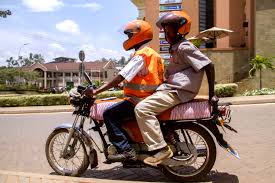
On a normal morning in Nairobi, bodaboda riders weave through traffic jams, ferrying office workers, parcels, and hope. Yet, behind this noisy rhythm of enterprise, a quiet revolution is gathering speed — Artificial Intelligence (AI).
As self-learning algorithms creep into logistics, transport, and retail, Kenya’s informal workers — from riders to vendors — face a new kind of uncertainty. Could AI soon replace their hustle, or will it become the tool that empowers them for the future?
According to the Kenya National Bureau of Statistics (KNBS), nearly 83 percent of Kenyans earn their income through the informal sector. That’s about 15 million people, forming the backbone of Kenya’s economic resilience. The looming wave of automation, therefore, is not just a question of technology — it’s about livelihood, survival, and national identity.
The Invisible Backbone of Kenya’s Economy
The bodaboda sector illustrates the power and vulnerability of informal labor. The National Transport and Safety Authority (NTSA) estimates that over 1.5 million riders operate across the country, generating more than KSh 60 billion annually. For many youth, it’s not just transport — it’s financial independence.
Yet, the same motorcycles that symbolize hustler freedom may soon face existential disruption. AI-powered ride-hailing algorithms, autonomous delivery systems, and predictive maintenance tools are transforming how urban logistics function.
In developed economies, self-driving delivery vehicles and drone-based logistics are already being tested. In Kenya, homegrown startups and global tech firms are experimenting with AI-driven fleet management, cashless transport, and delivery route optimization — innovations that could one day make some manual roles redundant.
Automation Creeps into Informal Spaces
Automation rarely announces itself; it arrives quietly, embedded in convenience. For instance, ride-hailing apps that assign riders based on speed, proximity, and ratings already rely on AI decision-making. Cashless payment systems in matatus and mobile delivery services powered by route-learning algorithms represent early stages of this shift.
A recent study by McKinsey & Company suggests that up to 50% of work activities globally could be automated by 2030. In Africa, where informal work dominates, the disruption will be deeply social.
| Sector | Emerging AI Impact | Potential Job Risk |
|---|---|---|
| Bodaboda & Delivery | Route optimization, autonomous vehicles | Medium–High |
| Retail & Street Vending | Smart kiosks, digital payments | Medium |
| Jua Kali Manufacturing | 3D printing, automated cutting tools | Low–Medium |
| Logistics & Dispatch | AI-driven fleet analytics | High |
While AI promises efficiency and safety, it also reshapes how money circulates — who earns, who gets replaced, and who adapts.
The Fear Factor — Replacement or Empowerment?
Many Kenyan workers perceive AI as a distant phenomenon — until they realize they’re already interacting with it. Digital ride-hailing apps like Bolt or Uber rely on machine learning to match riders and customers, track productivity, and predict demand spikes.
The fear is understandable. AI systems are designed to minimize human input, which translates to fewer people needed for coordination, dispatch, or manual data handling.
However, experts argue that the real issue is not replacement, but transition. Dr. Angela Mumo, a Nairobi-based technology policy analyst, explains:
“AI doesn’t have to kill informal work — it can make it smarter. The key is preparing workers to operate within these new systems rather than outside them.”
Indeed, new job categories could emerge. For example, AI-assisted fleet tracking requires technicians, data analysts, and system operators. Drone maintenance, data labeling, and digital mapping could open up new informal job niches — if workers are retrained and digitally included.
Policy Blind Spots — The Missing AI Safety Net
Kenya has made remarkable progress in digital innovation — from mobile money to digital IDs. Yet, when it comes to protecting workers from automation shocks, the country lacks a comprehensive national AI transition strategy.
The Ministry of Information, Communications and the Digital Economy unveiled the Digital Economy Blueprint in 2022, emphasizing innovation, data, and infrastructure. However, it remains silent on what automation means for the millions outside formal employment.
Without intervention, Kenya risks a technological class divide, where educated urban youth transition smoothly into the digital economy while millions of informal workers are left behind.
“We are preparing for a future we don’t understand,” laments Boniface Otieno, a bodaboda operator in Nairobi’s South B. “We see new delivery robots in videos, but nobody tells us how we will fit in when machines come.”
This sentiment reflects a widespread anxiety that technological progress might serve the few while displacing the many.
How to Future-Proof Kenya’s Hustle Economy
Kenya’s informal economy has thrived precisely because it adapts fast. The same ingenuity that birthed M-Pesa and made bodabodas indispensable can help workers survive AI disruption — but only if guided by deliberate strategy.
1. Digital Upskilling for Informal Workers:
County governments and local cooperatives can introduce AI literacy and basic tech training through vocational centers. Even a foundational understanding of mobile data analytics or app management can help informal workers stay relevant.
2. Inclusive AI Policy:
The national AI framework currently in draft form should involve informal sector unions and SACCOs in consultations. Their inclusion ensures real-world voices shape Kenya’s automation roadmap.
3. Ethical Technology Deployment:
Kenyan startups should build AI solutions that are assistive, not exclusive — tools that help riders find safer routes or optimize fuel use, rather than algorithms that replace them entirely.
A Moment of Choice
AI will not descend on Kenya in one dramatic swoop; it will seep in through logistics, payments, and city systems. But the decisions made now — about training, policy, and equity — will determine whether AI becomes a tool for empowerment or exclusion.
The bodaboda rider, the jua kali artisan, and the street vendor represent the creative pulse of Kenya’s economy. To leave them behind in the AI era would be to forget the very spirit that makes the nation’s hustle unstoppable.
Artificial Intelligence is here — not as a threat, but as a test. Kenya must decide whether its informal workers will remain passengers or become drivers of the digital revolution. The answer will shape not just the economy, but the soul of Kenya’s future work.
Never Miss a Story: Join Our Newsletter