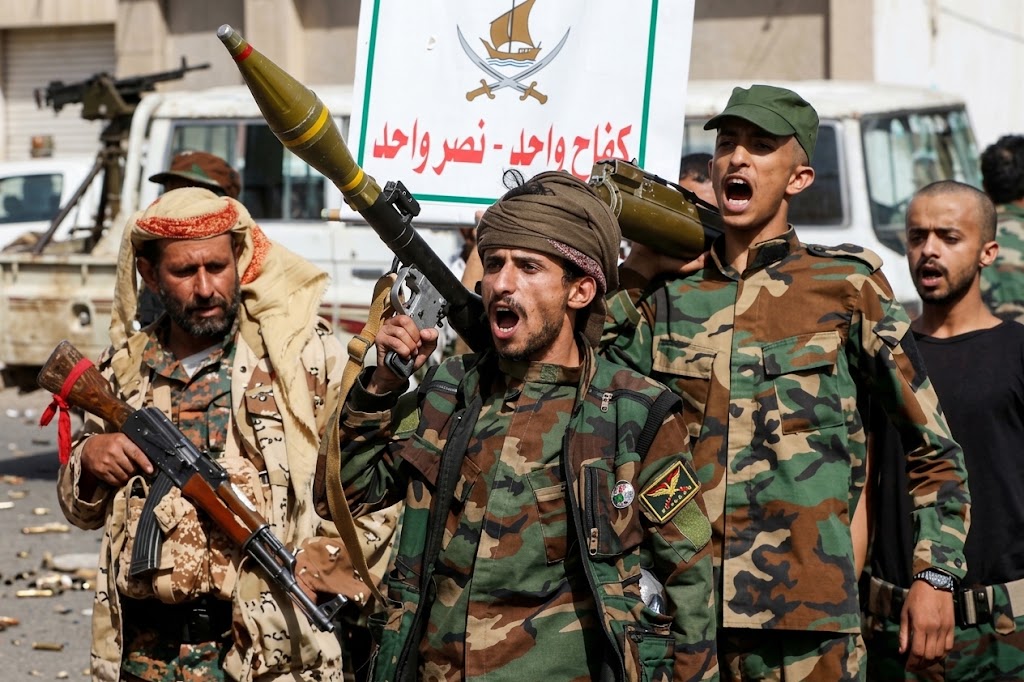
The conflict surrounding Yemen and the wider Middle East has entered a dangerous new phase after Houthi forces seized strategic islands in the southern Red Sea while launching fresh attacks against Saudi Arabia.
The developments are raising concerns over the security of two of the world’s most important maritime chokepoints — the Bab el-Mandeb and the Strait of Hormuz — with potentially serious consequences for global oil supplies, shipping costs and economies far beyond the Middle East.
The Iran-aligned Houthis have recently expanded their control along Yemen’s Red Sea coast, including the port city of Mokha and strategic islands near the Bab el-Mandeb Strait. They have also captured the Greater and Lesser Hanish islands, strengthening their position around one of the world’s key shipping corridors.
Houthis Increase Pressure on Saudi Arabia
The Houthi territorial gains have been accompanied by an escalation in attacks against Saudi Arabia.
On Monday, the Houthis claimed to have launched dozens of missiles and drones at targets in Saudi Arabia, including the King Khalid Air Base in Khamis Mushait. Saudi authorities subsequently issued emergency alerts in several cities, including Jeddah, Yanbu, Abha, Jazan, AlUla and Taif. The Civil Defence later announced that the immediate danger had passed.
Saudi-led forces have responded with airstrikes against Houthi positions in Yemen. Houthi officials said Saudi aircraft carried out dozens of strikes across several Yemeni provinces, while Saudi authorities have described their military response as necessary self-defence.
The escalation is particularly significant because Yanbu is one of Saudi Arabia’s major Red Sea oil ports. Any sustained threat to Saudi energy infrastructure or its alternative export routes could put additional pressure on an already strained global oil market.
Read Also: Historic Shift in Westminster: UK MPs Vote to Legalise Assisted Dying
Why the Red Sea Islands Matter
The Hanish islands and Perim Island are strategically important because of their proximity to the Bab el-Mandeb Strait.
The waterway connects the Red Sea with the Gulf of Aden and the wider Indian Ocean. Ships using the route can travel between Asia and Europe through the Red Sea and Suez Canal rather than taking the much longer route around the southern tip of Africa.
Control of territory around the strait therefore gives the Houthis greater ability to threaten or monitor maritime traffic.
The latest Houthi advances come at an especially sensitive moment because shipping through the Strait of Hormuz, another critical energy route, has already been severely disrupted by the wider regional conflict.
The possibility of simultaneous disruption at Bab el-Mandeb and Hormuz has consequently raised fears of a major shock to international energy markets.
Two Sailors Missing After Tanker Attack
Meanwhile, the maritime crisis has taken another alarming turn in waters near Oman.
The Panama-flagged oil tanker ELGAIA was attacked off Oman’s northern coast and subsequently caught fire. Omani authorities said the vessel was being towed to an Omani port while search-and-rescue operations continued for two crew members who went missing during the incident.
Reports identified the missing sailors as one Indian and one Pakistani crew member. Other members of the tanker crew were rescued.
The incident highlights the growing risks facing commercial shipping across the region. Tankers and other vessels are increasingly operating in an environment where missile, drone and other attacks can rapidly turn a commercial journey into a life-threatening emergency.
A Threat Beyond the Middle East
The consequences of the escalating conflict could extend well beyond Saudi Arabia, Yemen, Iran and neighbouring Gulf states.
The Red Sea and Strait of Hormuz are critical arteries for global trade and energy transportation. Disruption in either location can force shipping companies to take longer routes, increasing fuel consumption, insurance premiums, delivery times and ultimately the cost of goods.
For African countries that depend heavily on imported fuel and other commodities, prolonged disruption could also translate into higher transport and consumer prices.
The situation is therefore being closely watched by governments and energy markets around the world.
Read Also: The Great Silicon Divide: Inside the Fractured War for Artificial Intelligence
Humanitarian Cost Mounts
While attention is focused on oil, shipping and military strategy, civilians in Yemen are bearing the immediate cost of the renewed fighting.
The United Nations refugee agency reported that more than 100,000 people had been displaced internally by the renewed conflict, with thousands more fleeing across the sea towards Djibouti. Humanitarian operations are being complicated by insecurity, damaged infrastructure and restrictions on movement.
The latest escalation threatens to undo years of relative calm following the 2022 ceasefire and could plunge Yemen back into a much wider conflict.
For Saudi Arabia, the challenge is equally complex. Riyadh must protect its territory and energy infrastructure while preventing the conflict from developing into an even broader regional war.
For the international community, the immediate concern is keeping vital maritime routes open while preventing further escalation.
With the Houthis now strengthening their position around the Bab el-Mandeb and shipping under pressure around the Strait of Hormuz, the Middle East’s latest crisis is rapidly becoming a global economic and security concern.
Never Miss a Story: Join Our Newsletter