
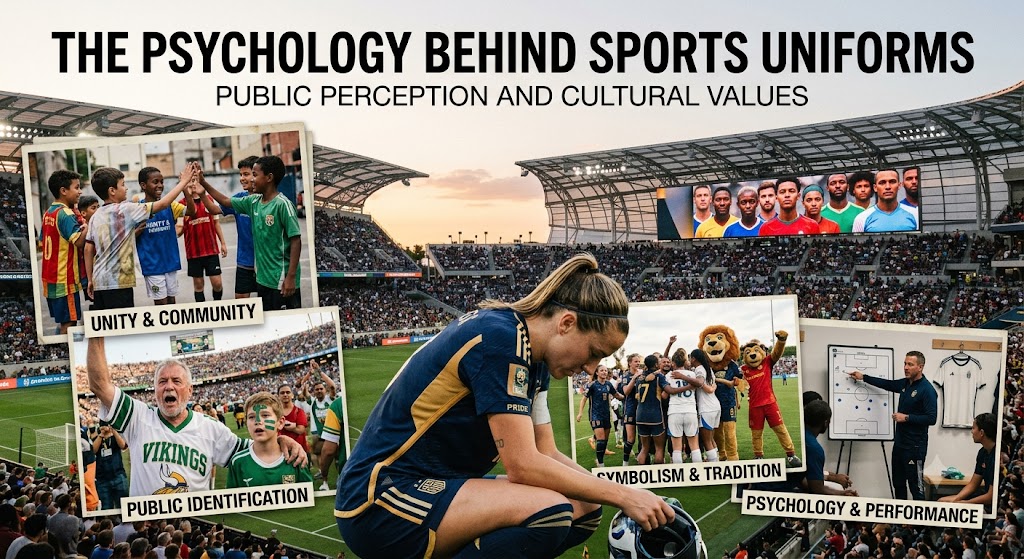
A curious psychological phenomenon unfolds every time the Olympic Games, World Athletics Championships or a major football tournament captures global attention.
Millions of people—including parents watching with their children—cheer on female sprinters, gymnasts, volleyball players and swimmers competing in outfits that reveal far more of the body than would ordinarily be considered acceptable in many public settings. Yet few viewers appear troubled by the clothing itself. Their attention is fixed on explosive starts, split times, flawless routines and dramatic finishes.
Take the very same athlete, however, dressed in the identical competition attire and walking through Nairobi’s Central Business District, and the public reaction would almost certainly be very different. Heads would turn. Conversations would stop. Many would regard the outfit as inappropriate.
The obvious question is: Why does the human mind interpret the same clothing so differently depending on where it is seen?
The answer reveals fascinating insights into the way our brains process information—and why culture, context and purpose shape our perceptions far more than we often realize.
Read Also: Lamine Yamal: The Barcelona Prodigy Who is Taking the World by Storm
The Brain Sees Context Before It Sees Clothing
Contrary to popular belief, the human brain does not simply react to exposed skin. It first interprets the situation in which that exposure occurs.
Psychologists have long observed that perception is heavily influenced by context. When viewers watch an athletics competition, their brains immediately classify the scene as one of competition, discipline, speed and human performance.
Instead of thinking, “This athlete is revealing a lot of skin,” the brain is more likely to think, “She is trying to run 100 metres faster than anyone else in the world.”
That mental framing changes everything.
Attention shifts naturally toward reaction times, technique, endurance, strategy and results. Clothing becomes secondary to performance.
The same psychological principle explains why surgeons work around partially or fully unclothed patients without viewing the situation sexually. The medical environment creates a completely different mental framework.
Why the Street Is Different
Public streets operate under a different set of social expectations.
Cities are places where people conduct business, attend school, worship, shop and interact with strangers. Every society develops informal standards regarding appropriate public dress, and those standards help create predictability in shared spaces.
When someone appears dressed in a way that sharply departs from those expectations, the clothing becomes the focus rather than the person’s activity.
This is known in psychology as expectancy violation—when something differs significantly from what people anticipate in a given environment.
The clothing itself may be unchanged, but its meaning changes because the setting has changed.
Sportswear Is Usually Designed for Performance—Not Provocation
A common misconception is that elite sports uniforms are designed primarily to attract attention.
In reality, performance is usually the driving consideration.
Modern sports apparel is engineered to achieve several practical objectives:
- maximise freedom of movement;
- reduce unnecessary weight;
- minimise air resistance;
- regulate body temperature;
- improve comfort during intense physical exertion; and
- allow judges to observe body alignment where necessary.
Every fraction of a second matters in elite athletics. Even small improvements in aerodynamics or flexibility can influence outcomes at the highest level.
This is why cyclists, swimmers, speed skaters and sprinters often wear body-hugging garments. Similar principles apply across many sports.
Have Uniforms Become Less Revealing?
Interestingly, international sport has been moving in the opposite direction from what many people assume.
Athletes today increasingly have more choices.
Female beach volleyball players may compete in shorts instead of bikini bottoms under many competitions. Some gymnasts now wear full-length unitards. Track athletes frequently choose longer compression shorts, while swimmers wear a range of approved designs depending on the event.
Many of these changes have been driven by athletes themselves, who have argued that comfort, personal preference and cultural values should be respected wherever possible without compromising fairness or safety.
Culture Shapes What We Consider Normal
What one society regards as ordinary may appear unusual elsewhere.
In many African communities, modest public dress remains an important cultural expectation.
By contrast, swimwear commonly seen on beaches in parts of Europe, Australia or Brazil may attract little attention because local customs have normalised it in those environments.
Neither response is entirely instinctive.
Much of what humans consider “appropriate” is learned through family upbringing, religious teaching, community expectations and social experience.
This explains why visitors often experience culture shock when travelling abroad. Their brains continue applying the norms of home until they gradually adapt to new surroundings.
Faith and Modesty in International Sport
Religion also influences attitudes toward athletic clothing.
Many Muslim women choose to dress modestly based on their interpretation of Islamic teachings. Over the past two decades, international sporting bodies have increasingly accommodated these preferences by approving sports hijabs, full-body swimsuits for certain events, long-sleeved uniforms and other modest athletic clothing where safety and competition rules permit.
Countries with strong traditions of modest dress continue to participate actively in global competitions, although athletes may wear attire that reflects both sporting requirements and religious convictions.
These developments demonstrate that inclusion in sport does not necessarily require a single standard of dress. In many cases, governing bodies are finding ways to balance competitive integrity with respect for cultural and religious diversity.
The Human Mind Is a Meaning-Making Machine
Perhaps the most remarkable lesson is not about sportswear at all.
It is about the extraordinary way the human brain assigns meaning.
Before we judge what we see, our minds unconsciously ask several questions:
- Where is this happening?
- Why is this person dressed this way?
- What activity is taking place?
- What are the social expectations here?
Only after answering those questions do our emotional and moral responses emerge.
The same athlete can therefore be viewed as a world-class competitor in one setting and as someone violating social norms in another—not because the clothing changed, but because the context changed.
Read Also: Chuck Norris Biography: Age, Family, Career, Children & Legacy
Finding Balance in a Diverse World
As international sport becomes more inclusive, societies continue to debate where the balance should lie between performance, personal freedom, modesty and cultural values.
These conversations deserve to be approached thoughtfully rather than emotionally.
Athletes should be able to perform at their best, while communities should also be free to uphold their cultural and religious identities. Increasingly, sports governing bodies are recognising that these goals need not be mutually exclusive.
Ultimately, understanding the psychology behind perception reminds us of an important truth: people rarely respond to clothing alone. We respond to the meaning our minds attach to it.
Recognising that distinction encourages greater empathy across cultures, reduces unnecessary judgement and helps us appreciate that what appears obvious in one setting may carry an entirely different meaning in another.
Never Miss a Story: Join Our Newsletter